Case StudyPhilips
Giving charge nurses and case managers a clear view of every patient's path to discharge.
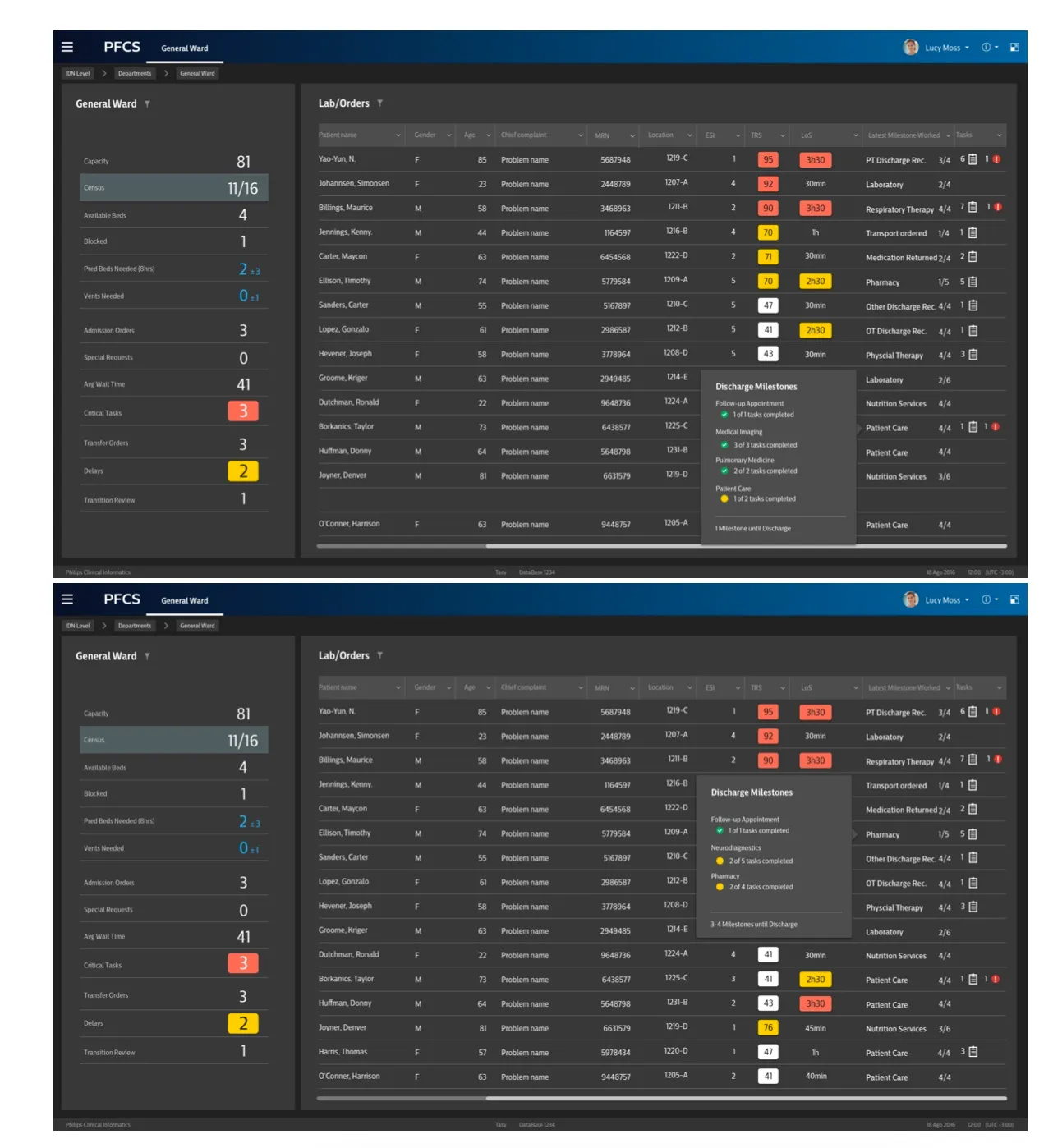
The discharge process is rarely smooth. When a patient is going through it, complications can come up that complicate things further for nurses — especially across shift changes. This module gives caretakers a brief, shared view of what's been done and what's next, and uses AI to predict where a patient is headed based on the history of similar patients.


Overview
A shared view of a patient's path out the door.
The discharge process is not always smooth. When a patient is going through it, complications can come up that complicate things for nurses, especially when they change shifts. It’s helpful for caretakers to see a brief overview of what has been done and what needs to be done. Using AI, the module can also predict where a patient is headed, based on the data of patients with a similar health history.
My role was to facilitate design workshops to fully understand the problem, the product, and the goal, and align on business objectives — collaborating with another UX designer, product managers, and stakeholders to design a feature showing discharge barriers, in order to optimize workflows for the patient discharge process. I conducted user research, gathered feedback and requirements, created user flows and wireframes, and finalized a design mockup with a prototype.
Focus: Discharge status visibility and milestone prediction for charge nurses and case managers
Scope: User research, UX exploration, module design within Philips PFCS
Combining clinical and operational data to drive actionable intelligence →
The Problem
Main problems for charge nurses and case managers
- Charge nurses need to see which patients need tasks completed in order to move onto the next milestone.
- Charge nurses need to see why there are delays in the discharge process.
- Nurses need proper data in order to make informed decisions on where to distribute their limited resources.
- Clinicians want to see what tasks were completed and what milestones the patient is likely headed toward, in order to prepare equipment beforehand.
The task was to create a module for charge nurses and case managers to view completed tasks, upcoming milestones, and predicted milestones for patients going through the discharge process.
Discover
Key findings
- Resource management: charge nurses want to prioritize simple tasks that patients need done in order to discharge them as soon as possible.
- Understanding: case managers want to understand complications and delays, and coordinate accordingly.
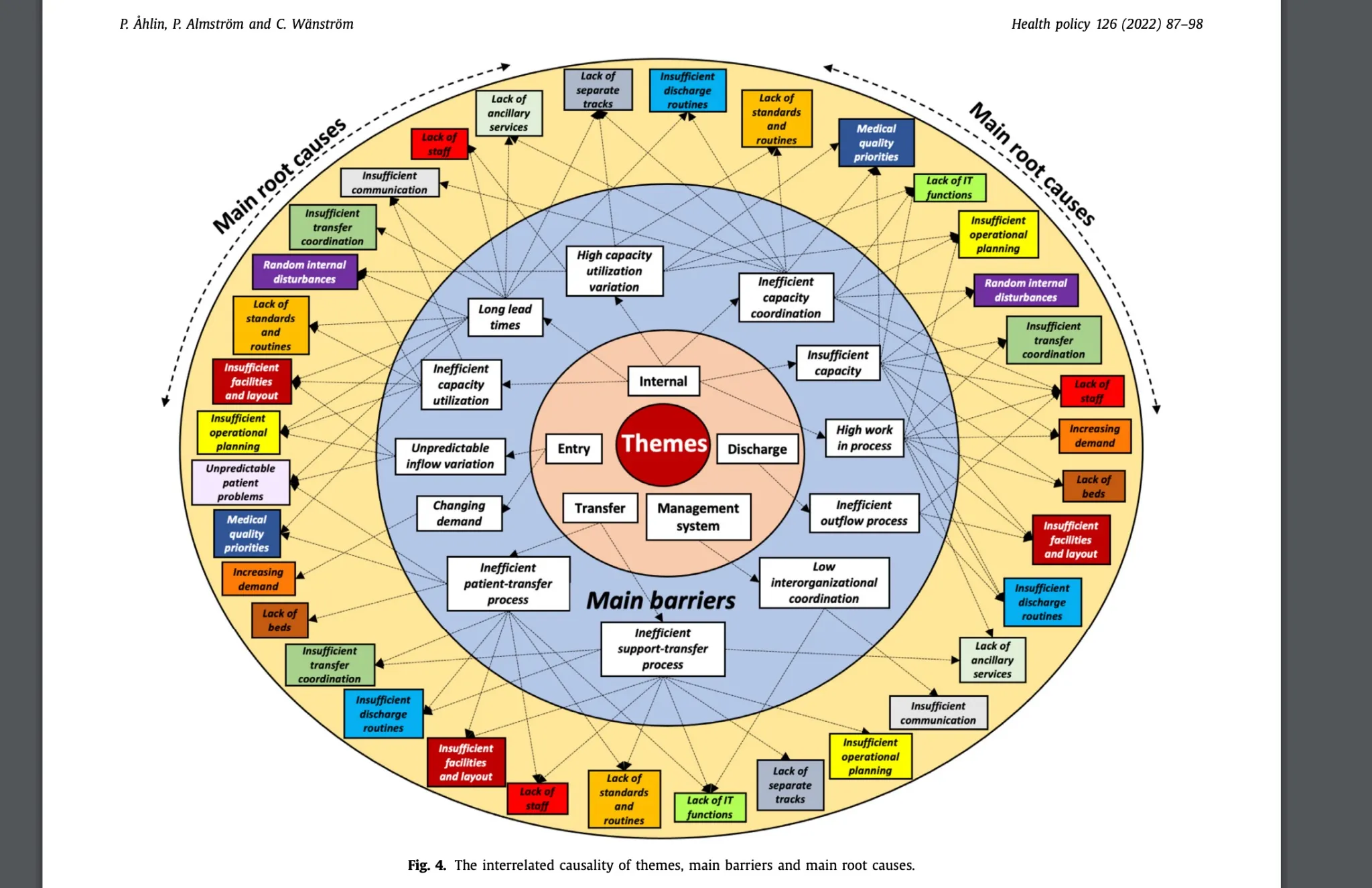
- The discharge process isn’t smooth — patients have many possible pathways they can end up on, and can run into complications.
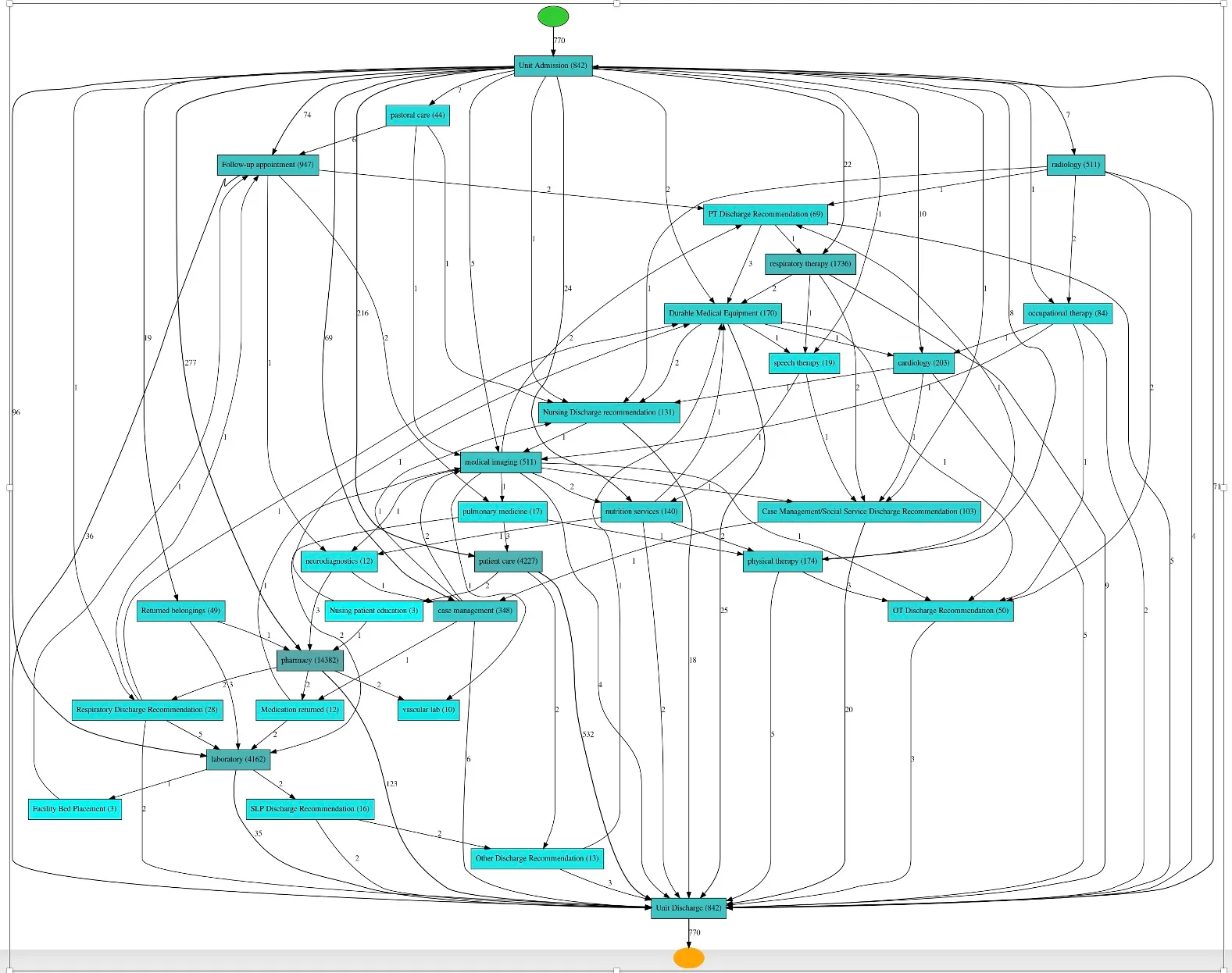
Cross-department collaboration: I met with a data scientist who explained the pathways and data taken into consideration when predicting which milestone a patient is headed toward.
Discovery
Preparation
Understanding the customers
I had the opportunity to speak with a nurse employed by Philips, as well as a former nurse — Peggy Clifton and Bea Mitchell. They helped break down the thinking process of nurses: what they’re looking to achieve at any given point in time, and their user goals.
Use cases
Simple scenario: as a charge nurse or case manager, I’d like to understand how to discharge a patient by completing a few small tasks, to help hit the hospital’s KPI.
- Need: which patients have only a small number of tasks remaining, and which are close to discharge.
- Act: select a patient to understand what they need to clear their discharge barrier and move toward a quick discharge.
- Need: understand what tasks to focus on to finalize that patient’s discharge quickly.
- Act: if the patient only has small tasks left, focus on completing them; if the patient is too complicated, select a different patient to focus on first.
Complicated scenario: I have a patient with a lot of discharge delay issues, because a lot of milestones are pending. I’d like to understand where to focus first, and coordinate between teams to move the patient forward.
- Need: prioritize and understand the issue or complication behind a patient’s status.
- Act: coordinate between teams to speed up the task, or pursue alternative plans.
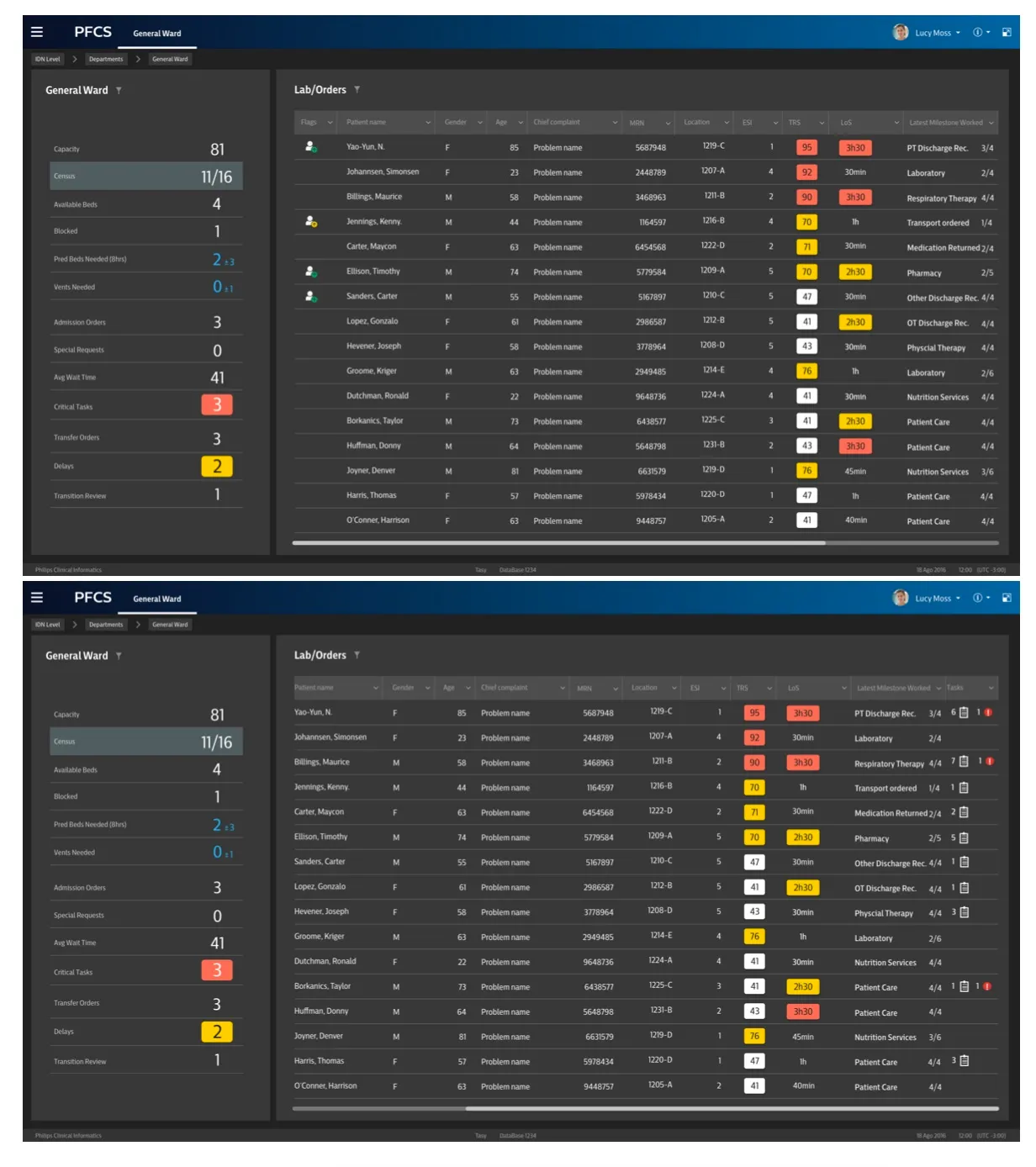
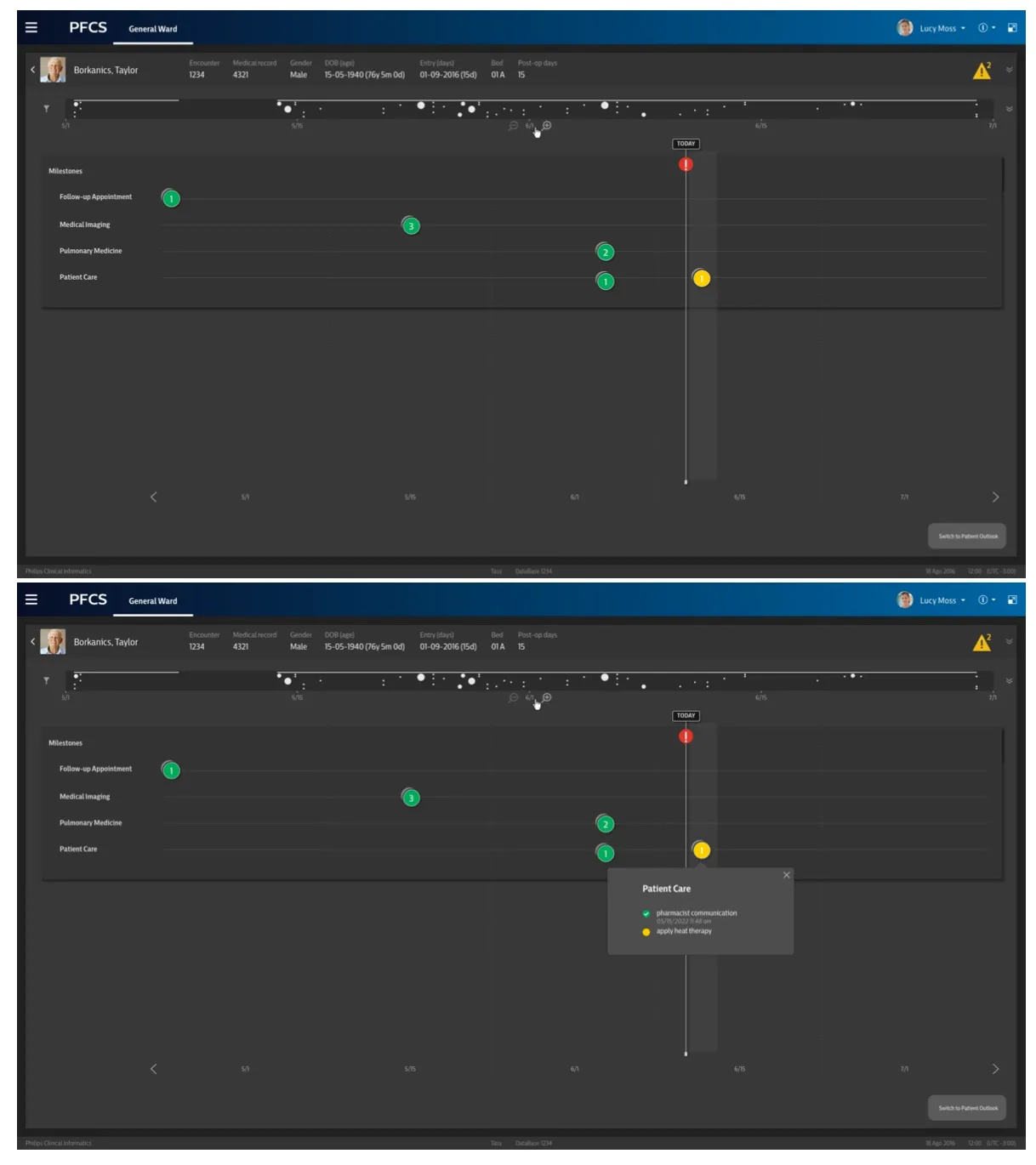
Across both scenarios, the interface needed a discharge module with a multi-patient list, tasks visible within a column, and the patient’s current discharge milestone (or milestones) — plus an individual patient view showing what’s being carried out and the patient’s progress.
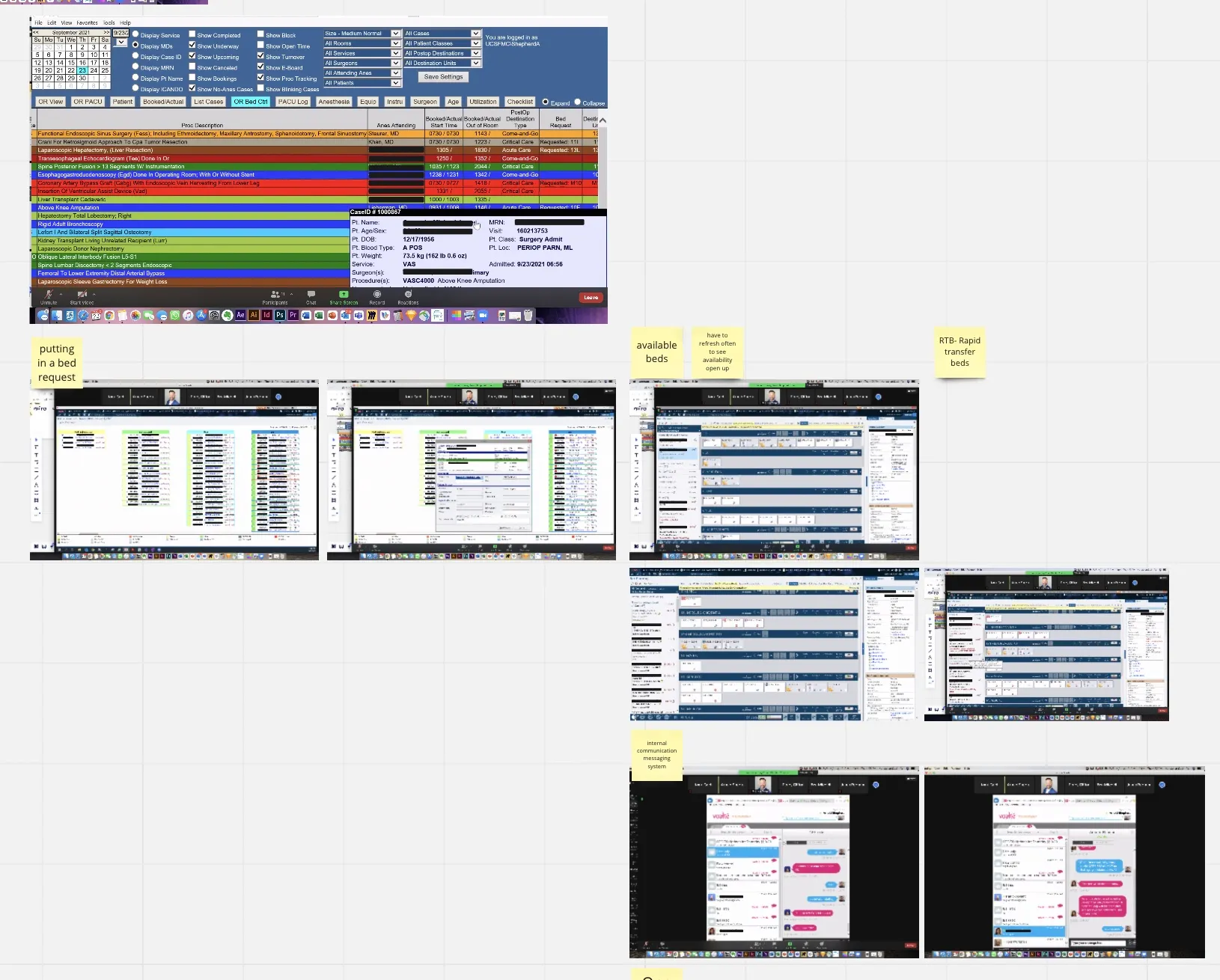
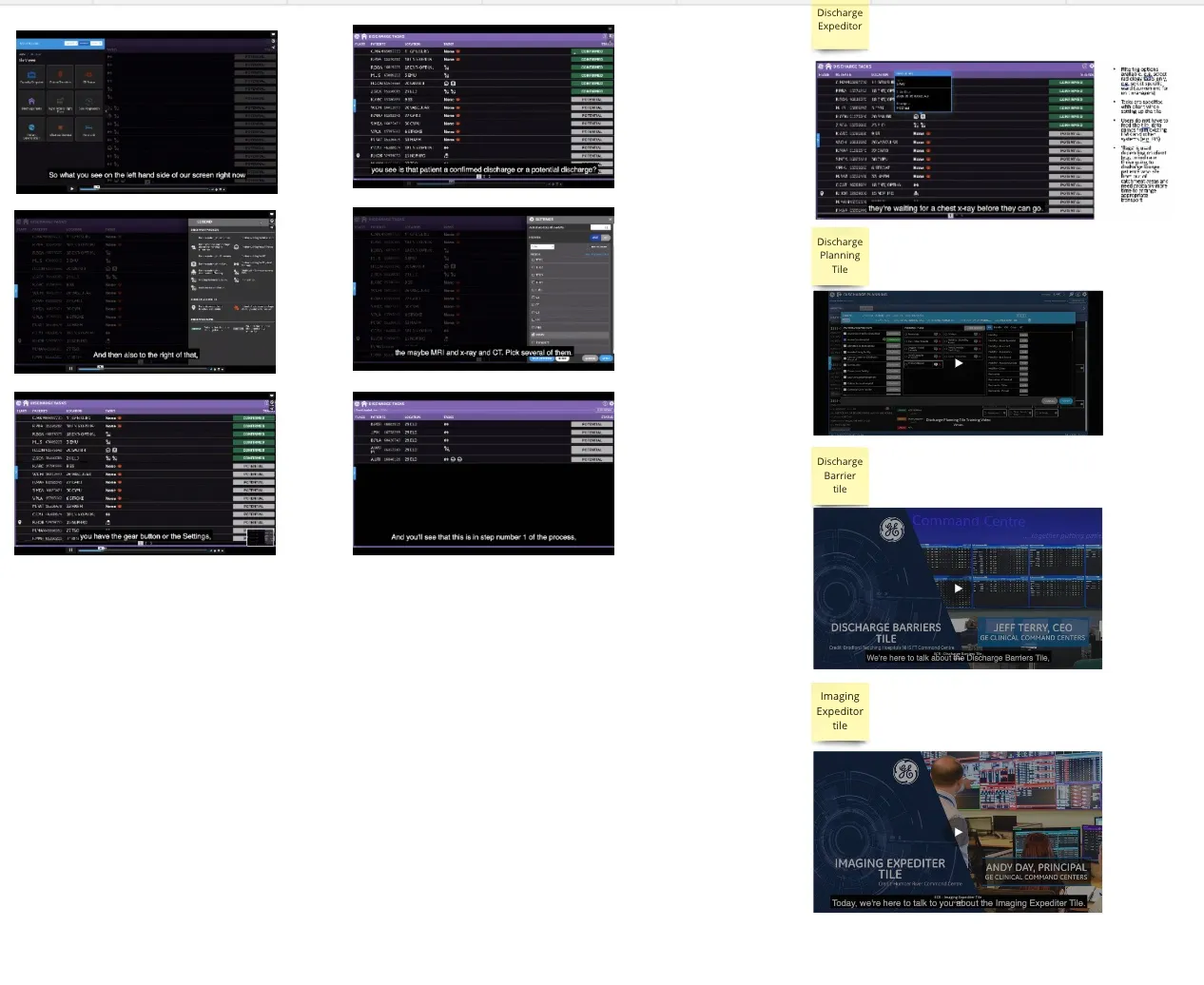
Competitive research
Competitive Research
Explore
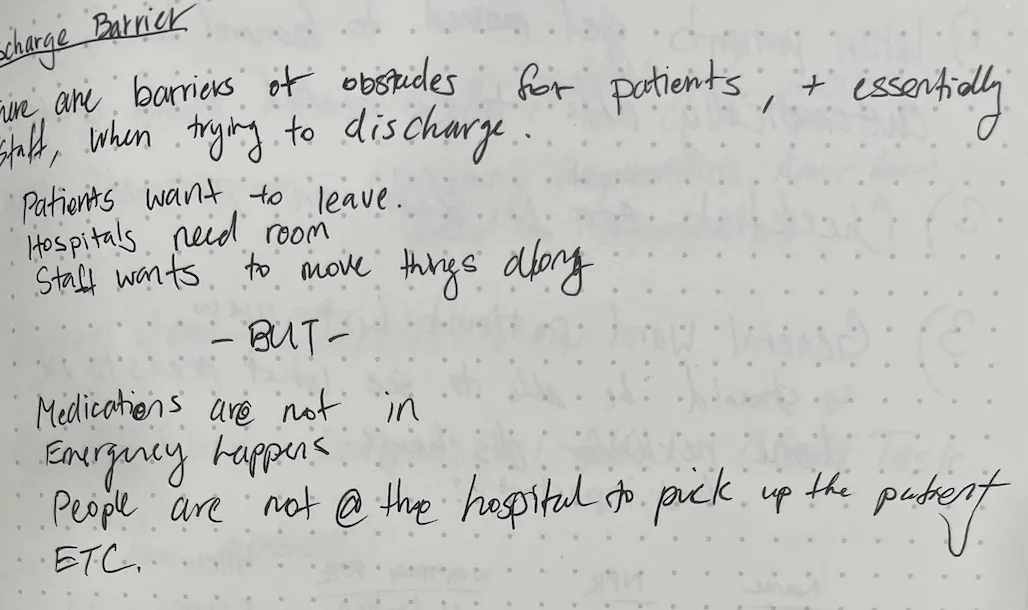
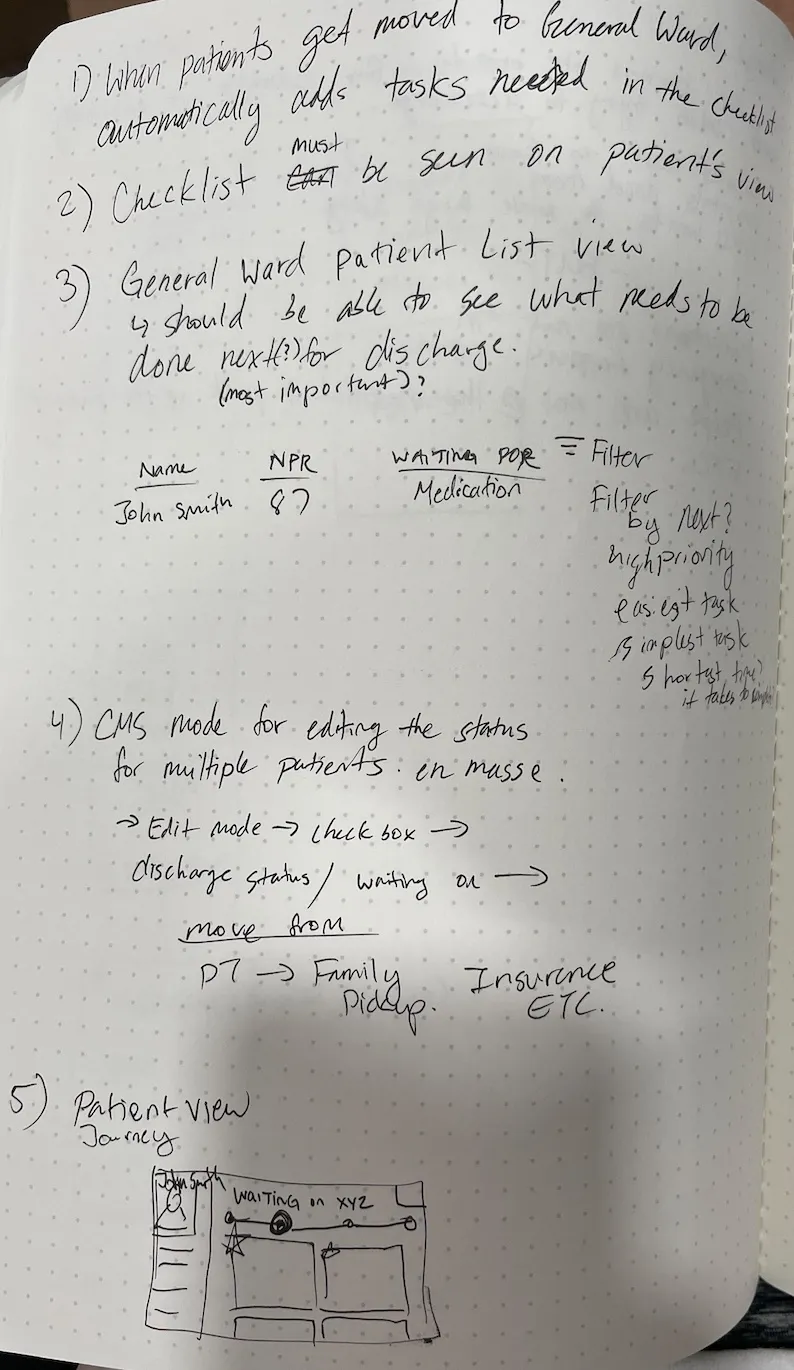
Sketches and notes
Early sketching and notes exploring how to surface tasks, milestones, and delays for charge nurses and case managers.
Sketches / Notes
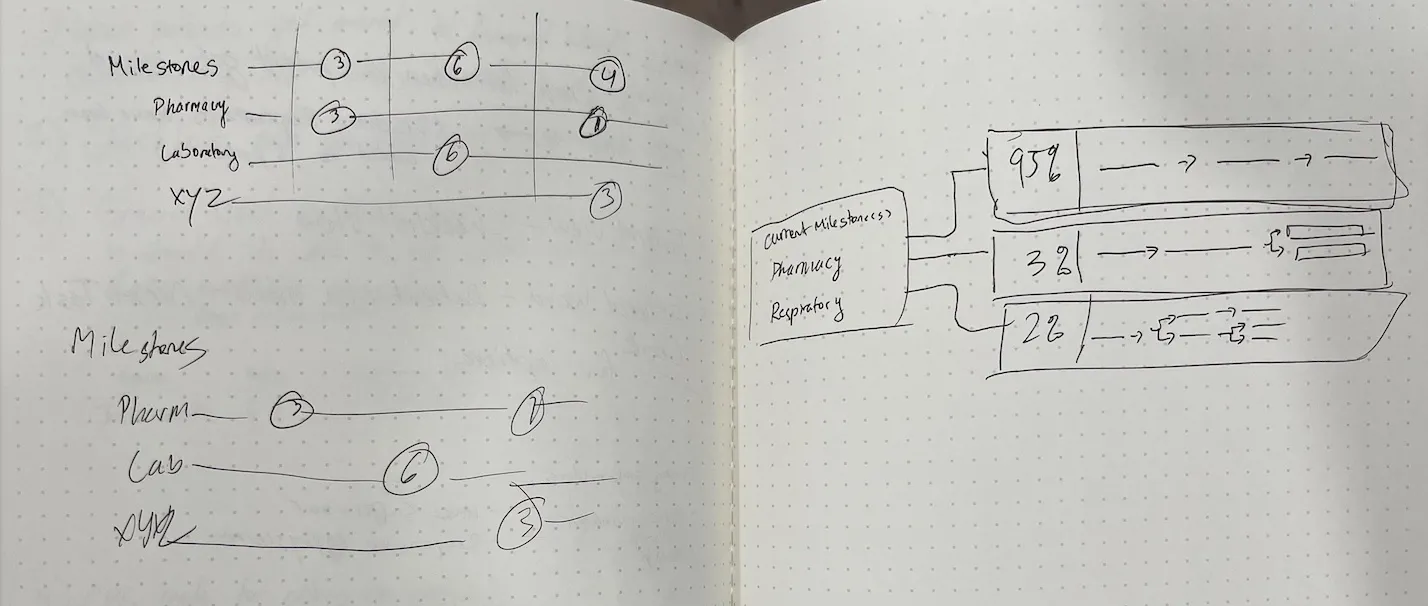
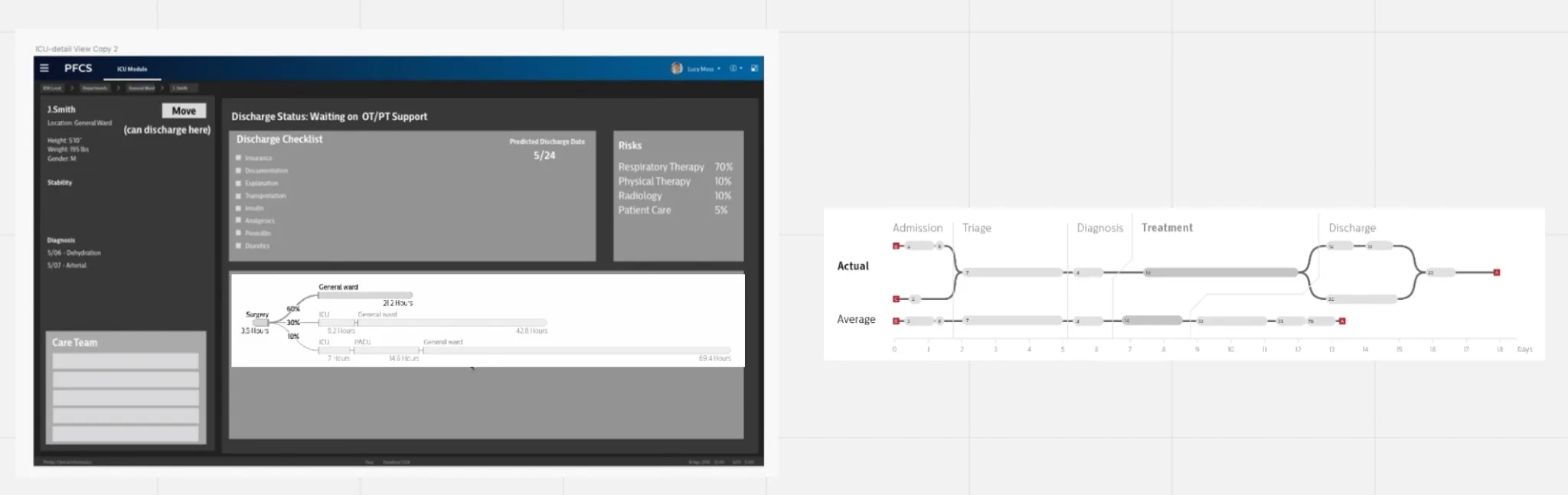
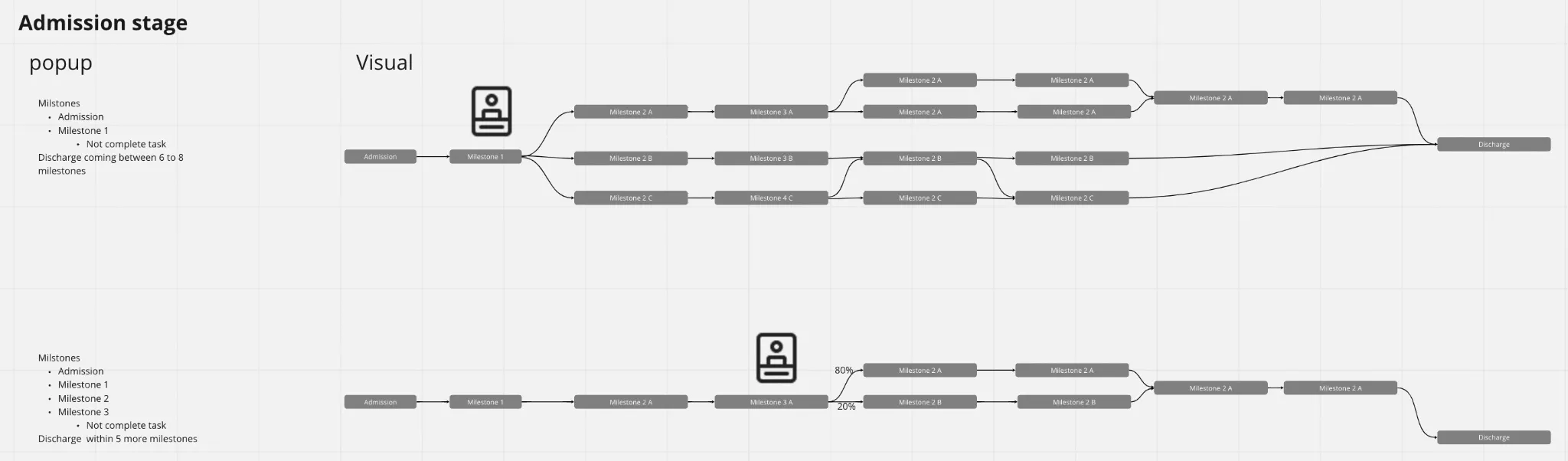
Predictions and algorithms
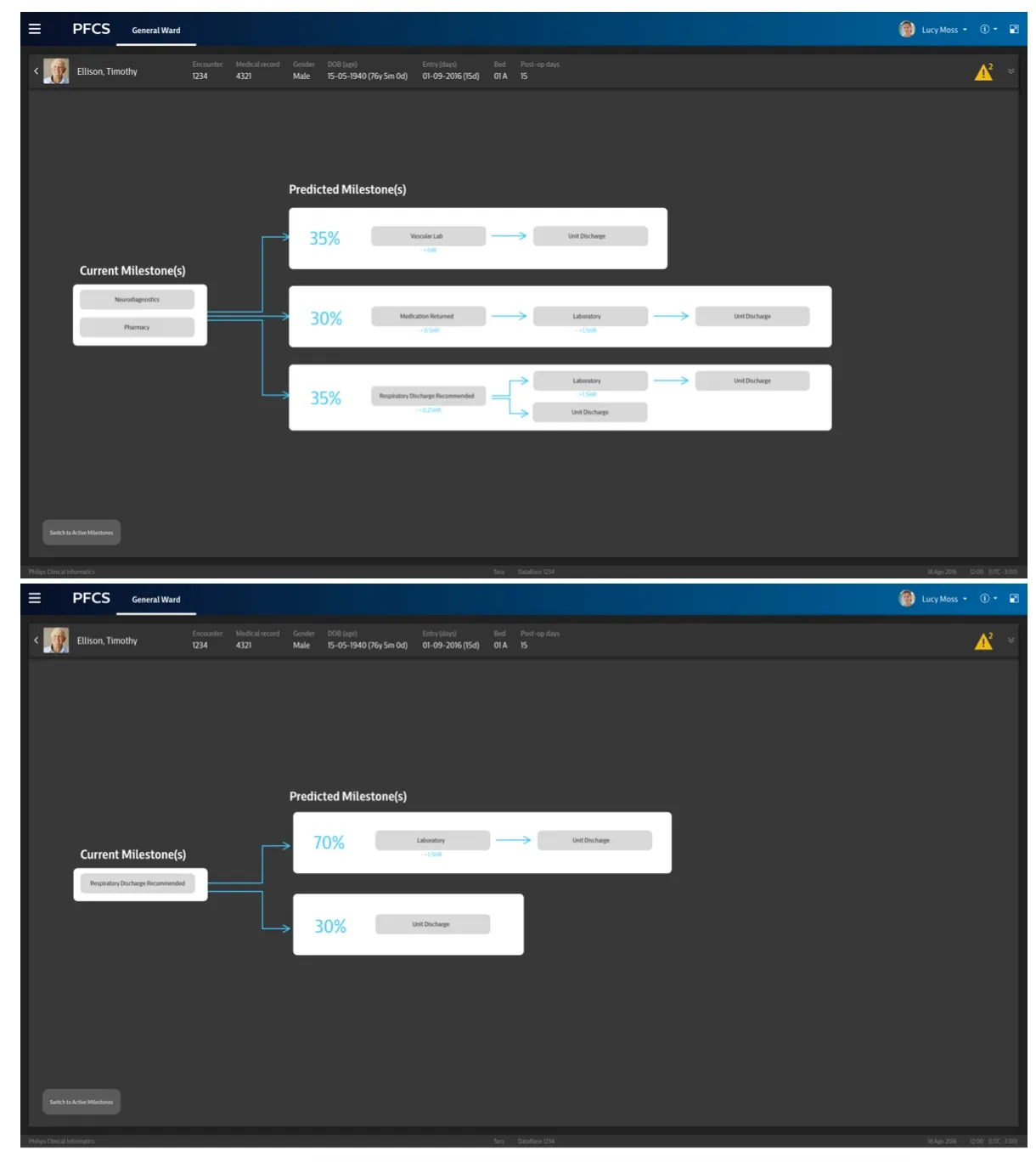
Exploring how predicted milestones, driven by the data scientist’s model, could surface within the module.
Predictions / Algorithms
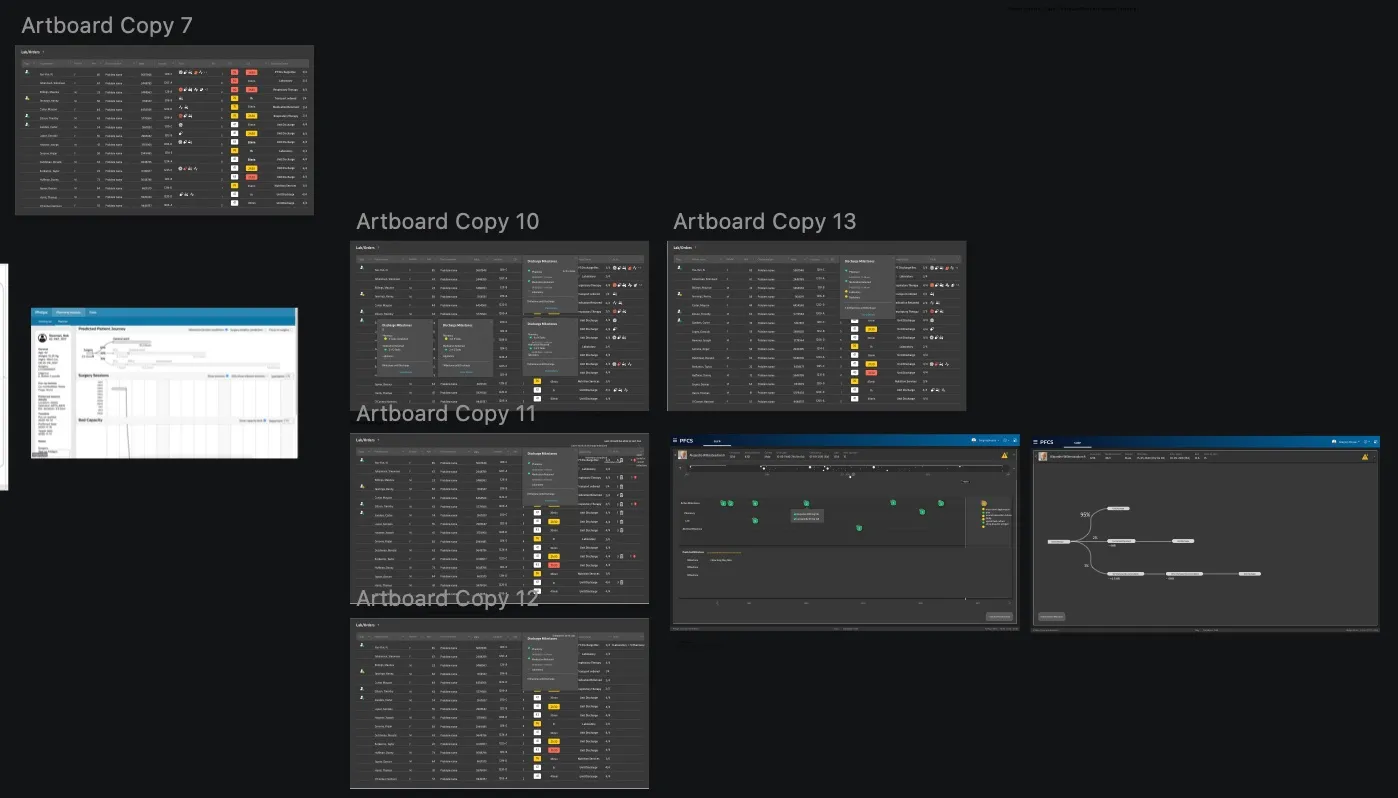
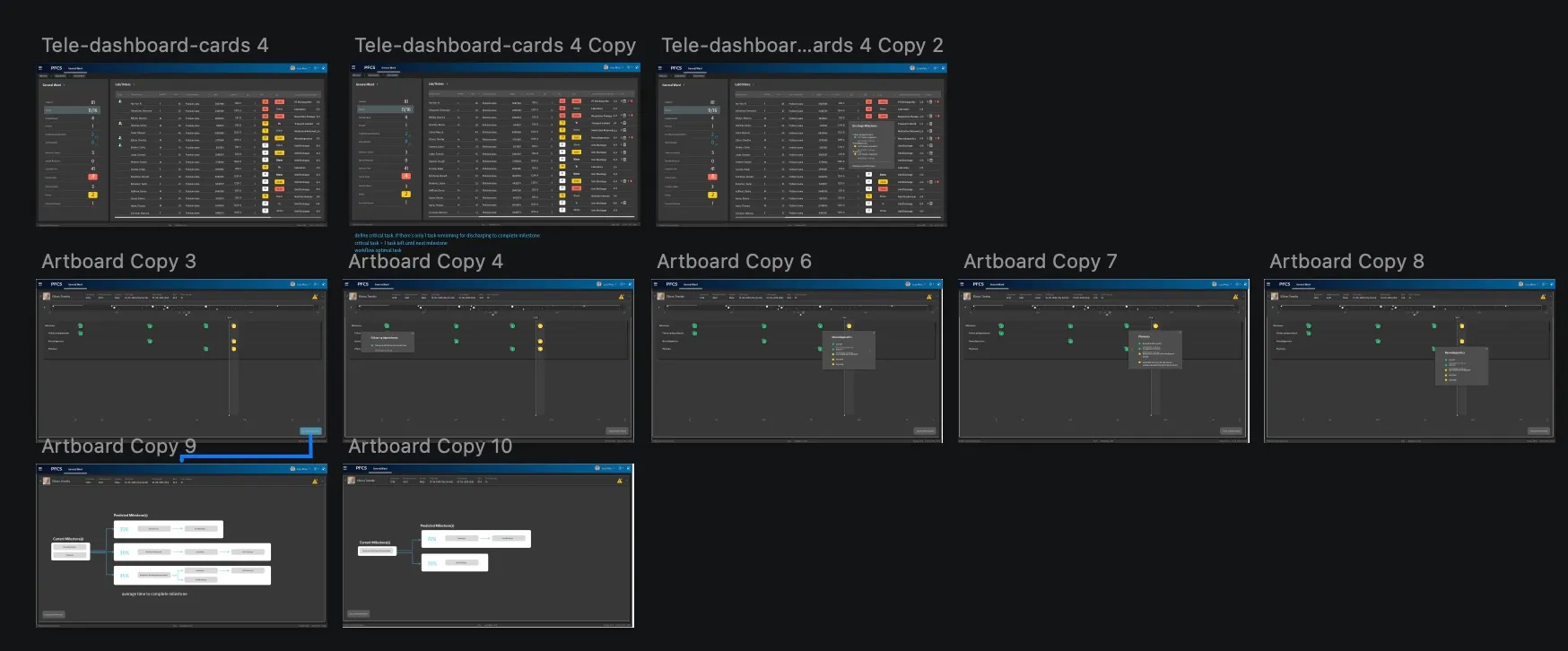
Resolved wireframes
Wireframes resolving the multi-patient list, task columns, and individual patient milestone views.
Resolved Wireframes
Design
Final design
The final module surfaces completed and in-progress tasks at a glance, gives charge nurses and case managers an individual patient view with tasks and milestones, and predicts a patient’s next milestone based on their history and the underlying algorithm.
Final Design
Flow
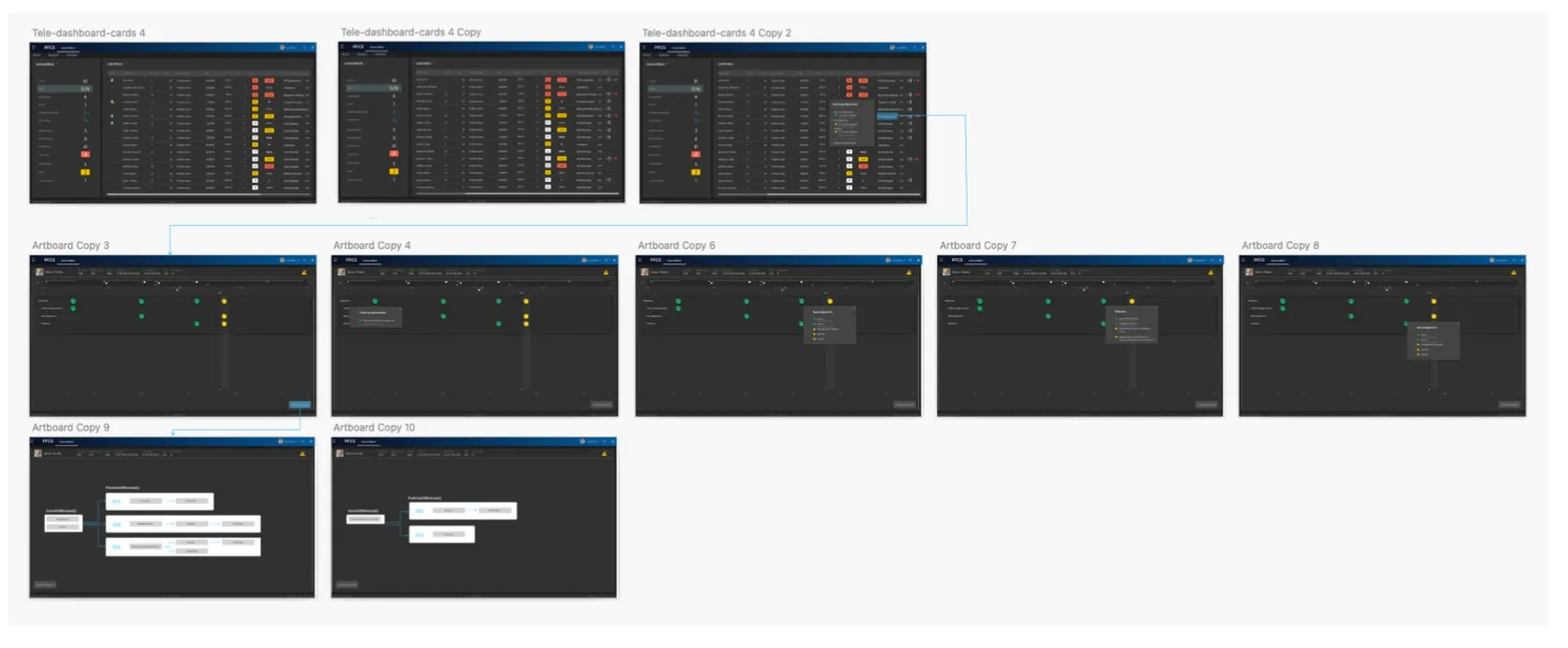
Outcome
- A module added to the existing app (PFCS – Patient Flow Capacity Suite), designed to display patient discharge status and predict the next milestone or stage of the discharge process.
- Components that clearly show completed and in-progress tasks.
- An individual patient view with tasks and milestones.
- Predicted milestones for each patient, based on history and algorithms.
Lessons Learned
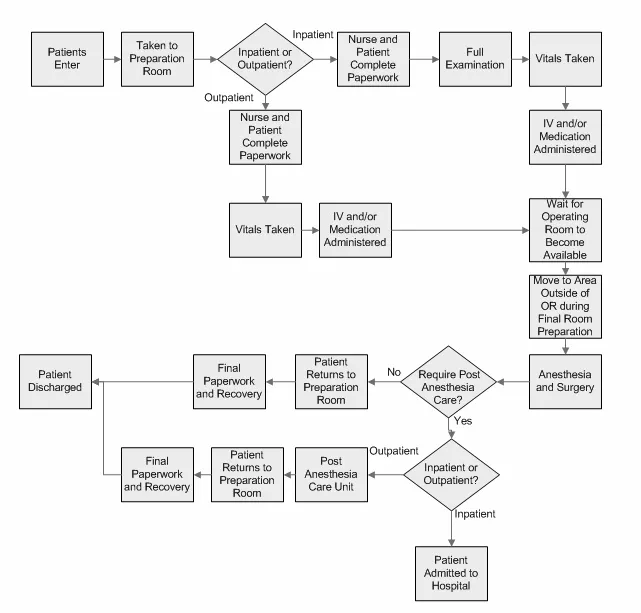
- Discharging patients is a lengthy, complicated, varying process. Hospitals are always very full, and staff are trying to move patients along as fast as they can.
- Discharging is time-consuming because patients will sometimes be vague and say they don’t feel well on purpose, just to stay longer.
- There’s a lot of coordination involved just to get someone out the door — payments and insurance, a ride or pickup, length of stay.
- Clinicians feel unmotivated because as soon as they release a patient, two more are waiting for a room.