Readiness Request
A scalable web application experience for service members for organizations under the Defense Health Agency (DHA), such as US Army, US Navy, US Army National Guard, etc. to view their overall deployment readiness status and manage their health procedures requests, appointments, and group events.
This project is password protected
Enter the password to view the full case study.
Overview
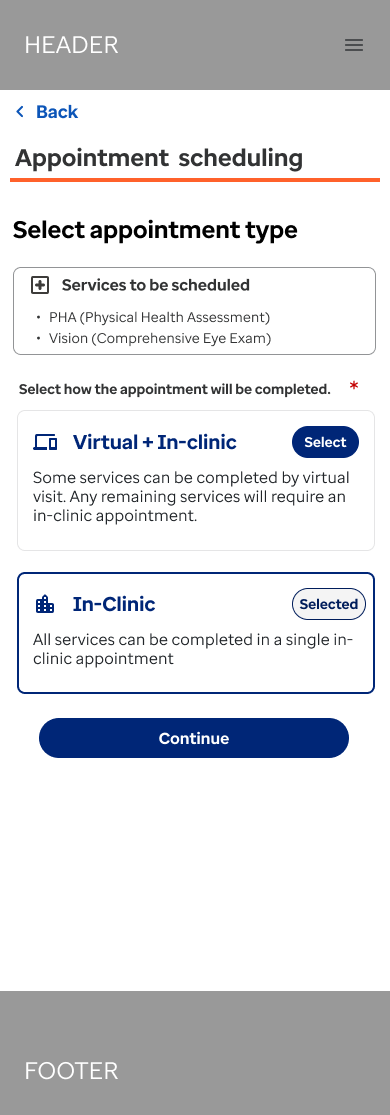
RHRP4 is a DHA (Defense Health Agency) program delivering medical/dental readiness services such as physical exams, immunizations, labs, dental, behavioral health to Reserve Component and TRICARE Prime Remote service members, DoD civilians, and DHS personnel across all 50 states, PR, Guam, and other territories. This project was the Service Member facing side of the Electronic Scheduling Capability: a secure web/mobile app letting service members find providers, book and manage appointments across three modalities (in-clinic, virtual health, group events), upload records, and track which readiness requirements are coming due.
Problem
Readiness data lived across multiple DoD/DHS systems of record (DENCLASS, CDS, DXP, DEERS, DOEHRS-HCD
Scheduling was historically phone-first, and service members had no clear, unified view of what was overdue or coming due.
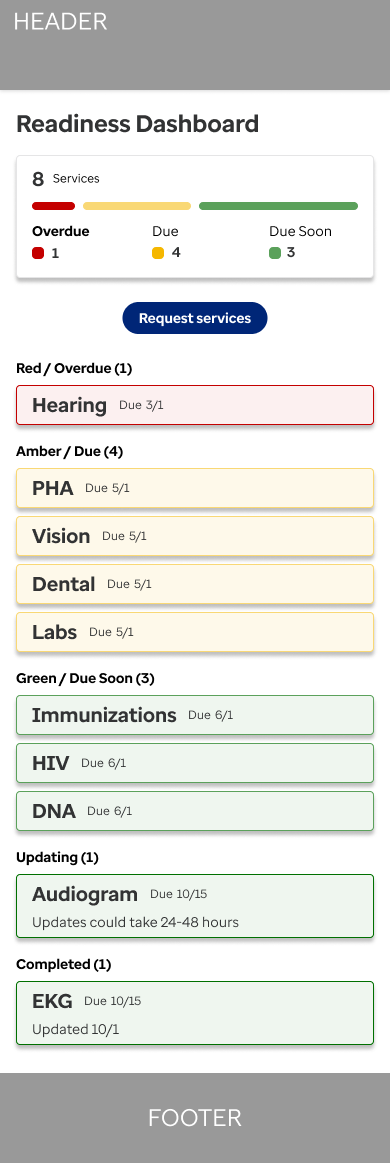
The PWS explicitly requires the system to "display SM electronic health record overdue readiness services status and services due in the next 30/60/90 days"
SMs needed to self-schedule or have someone schedule on their behalf (a Scheduler could be the SC Lead, a designee, or the SM), which means the product had to support delegation, not just self-service.
No-shows and late cancellations were expensive so a design solution is needed to effectively reduce waste.
Constraints
- Unknown award date which caused difficulties in prioritization of features
- Designing for true MVP vs. Pre Award vs. Post Award
- Supporting multiple contracts
Approach
Research
The current contract holder, QTC, is a different organization and so I had no insight into the current customer facing experience. However, I did have access to a semi-relevant view for clients.
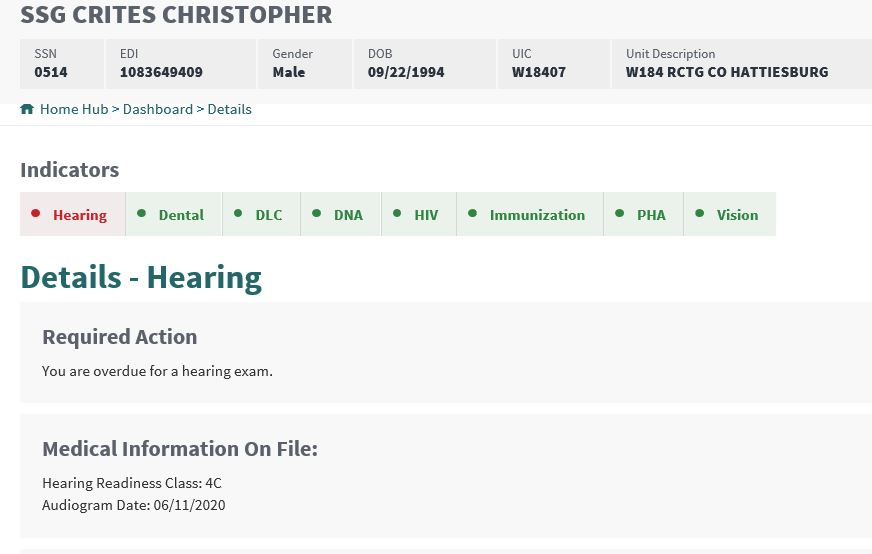
There is no information about due dates, only a date of when it was received, and two colors: green to signify that they are compliant, and red for out of compliance, no in between.
Given the contract requirement to show services due within 30/60/90 days, my approach was to focus on allowing a more insight view of their readiness, along with the ability to request procedures.
Cross Team Collaboration
I also had the opportunity to connect with our Associate Director Deputy Program Manager, who served in the Army National Guard. He was a great asset because he provided information about what they used to use vs. what is actually needed in order to be ready to be deployed.
I was also able to connect with the Program team that initially was awarded RHRP2, and therefore had a wealth of knowledge of the contract as a whole and how each domain operated.
Initial Wireframes
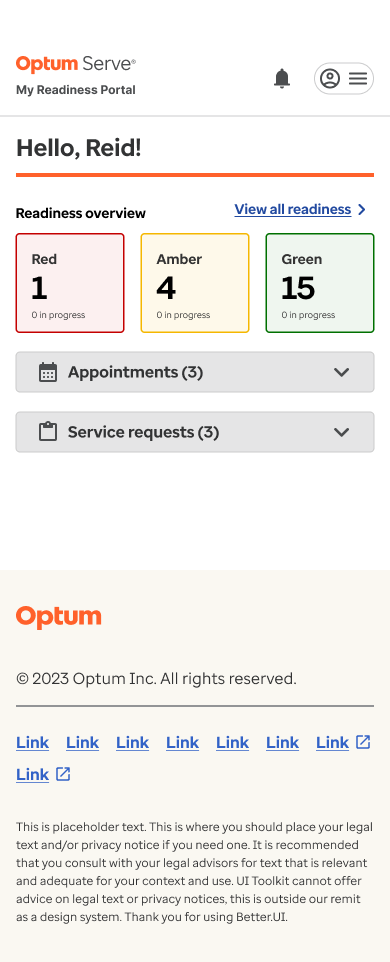
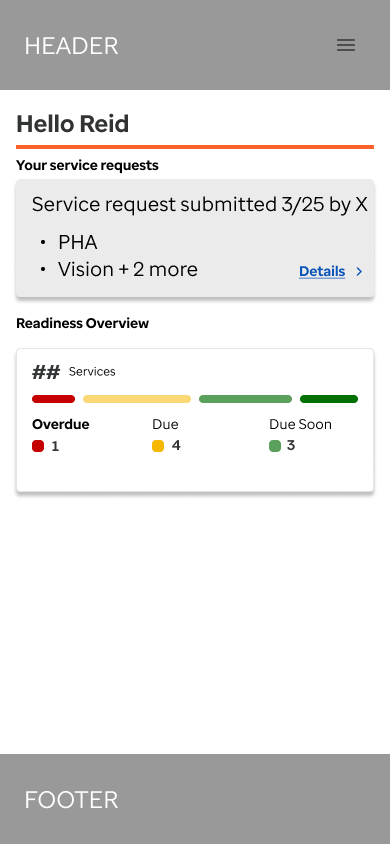
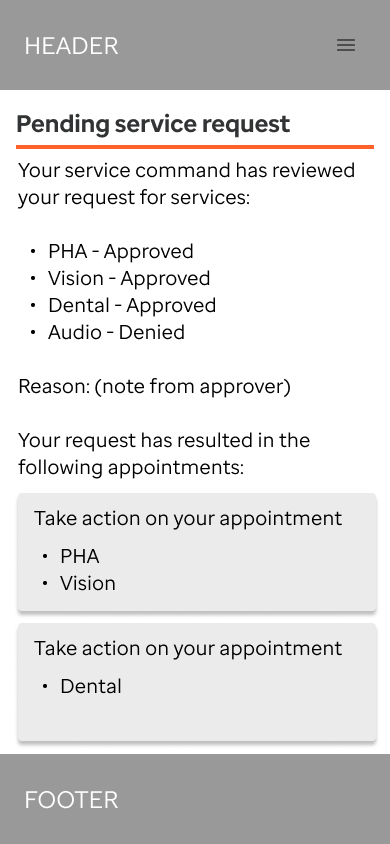
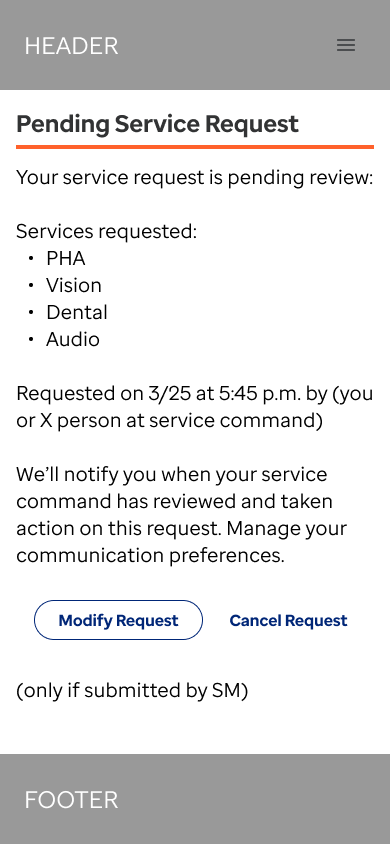
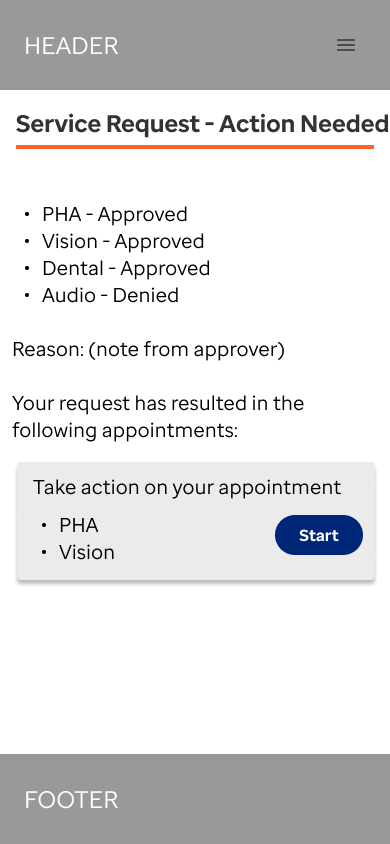
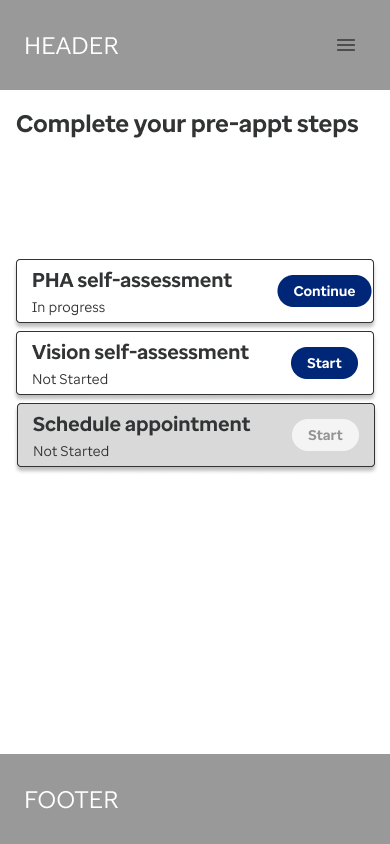
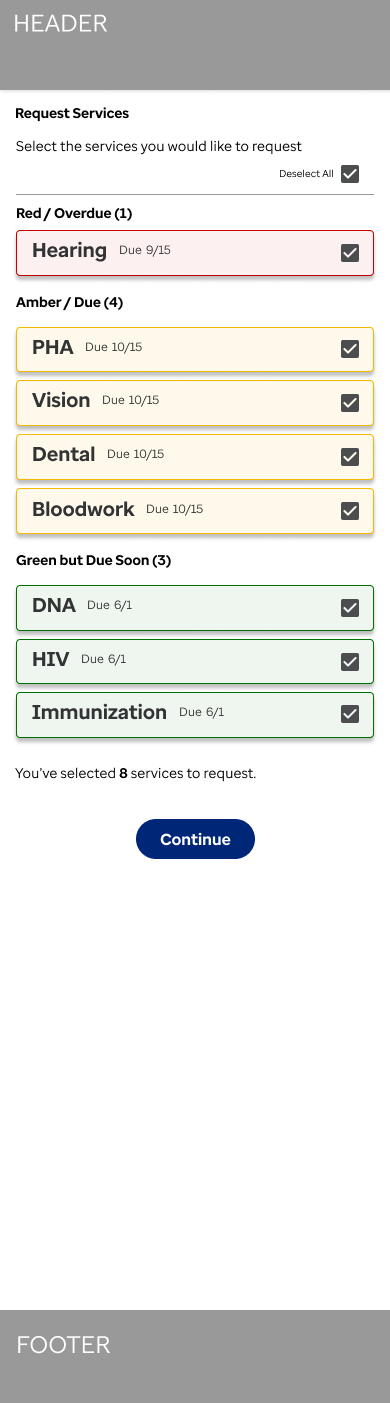
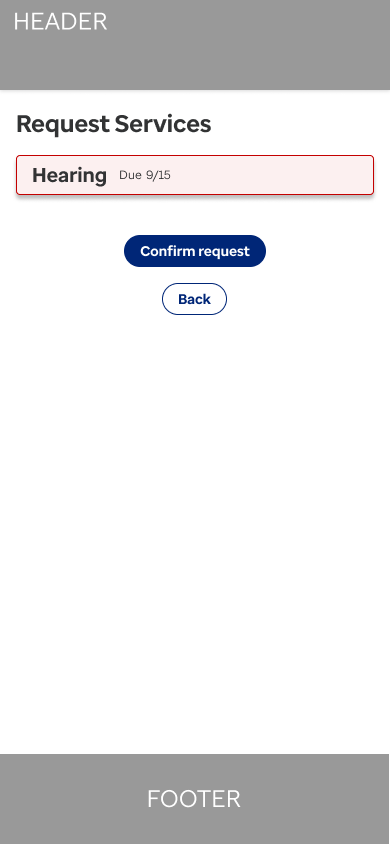
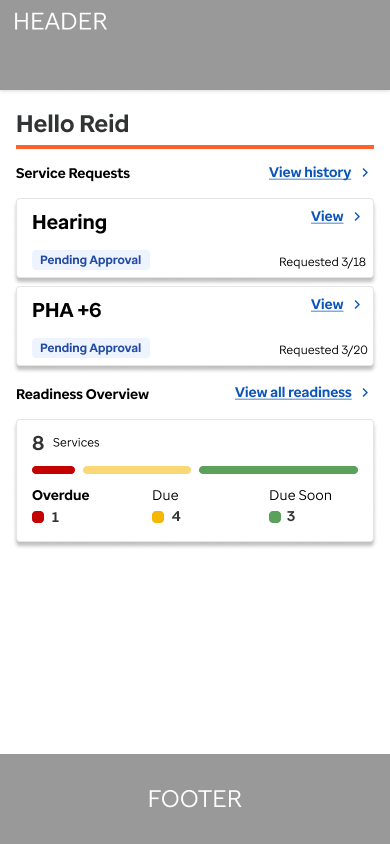
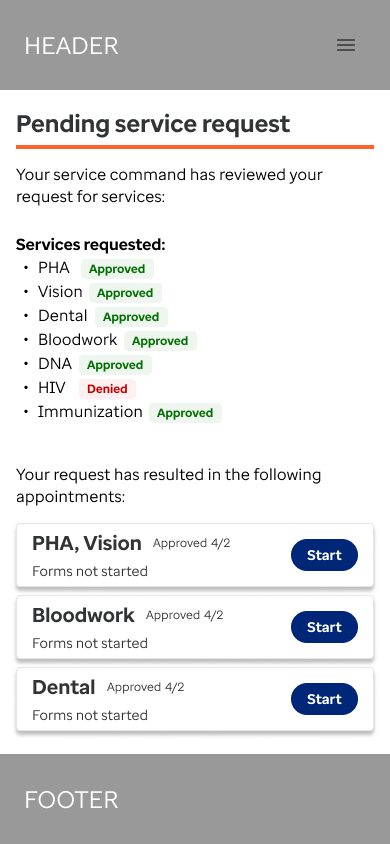
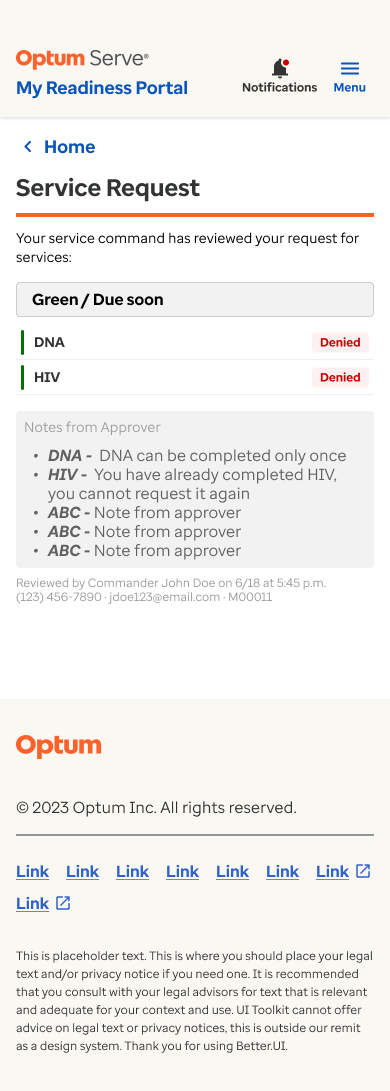
Based off of initial conversations, we knew we had to provide an experience where service members could see their status. We broke this up into Red, Amber, and Green to fit the requirements of 30/60/90 days out. We also provided a way to request medical procedures that were necessary for them to avoid being in the Red. We also provided a way to view the status of the request per procedure because the approving authority may approve or deny them.
Key Decisions
More prominent status and services due counter for readiness
Need a better design for Service Members to take more action on due services.
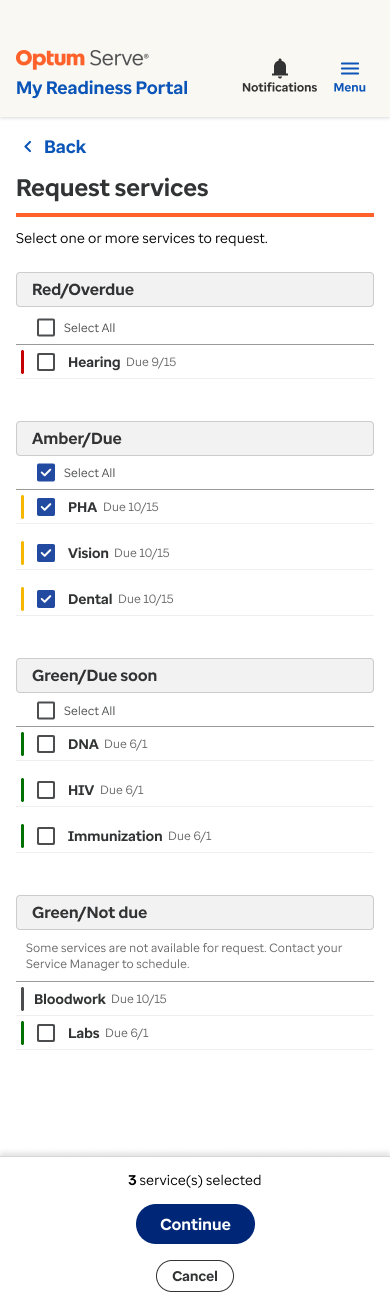
Redesign services and request process to be scalable
Requesting services can be done by the client, Service Component.
Segment domains
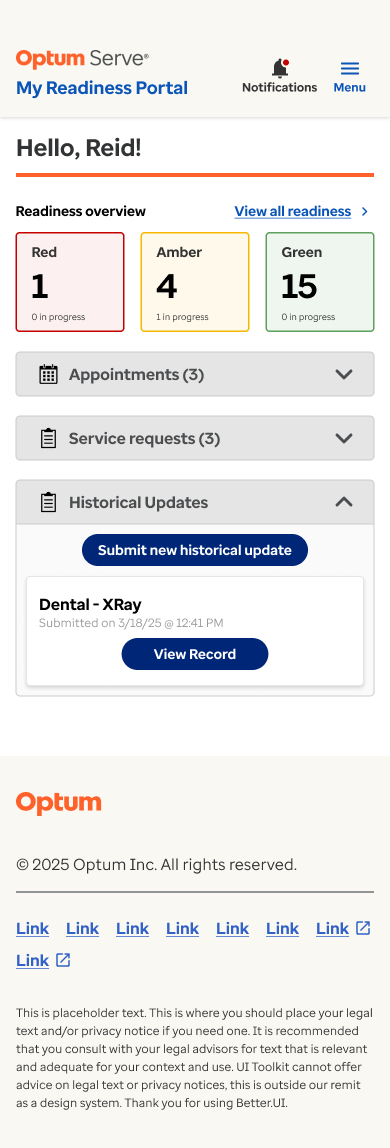
Viewing requests, scheduling appointments, and upload historical documentation are handled by different domain technologies.
Result & Impact
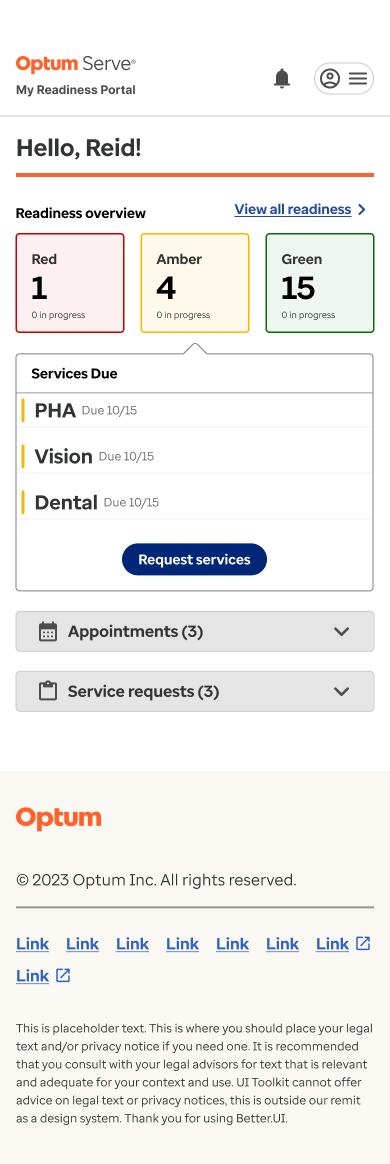
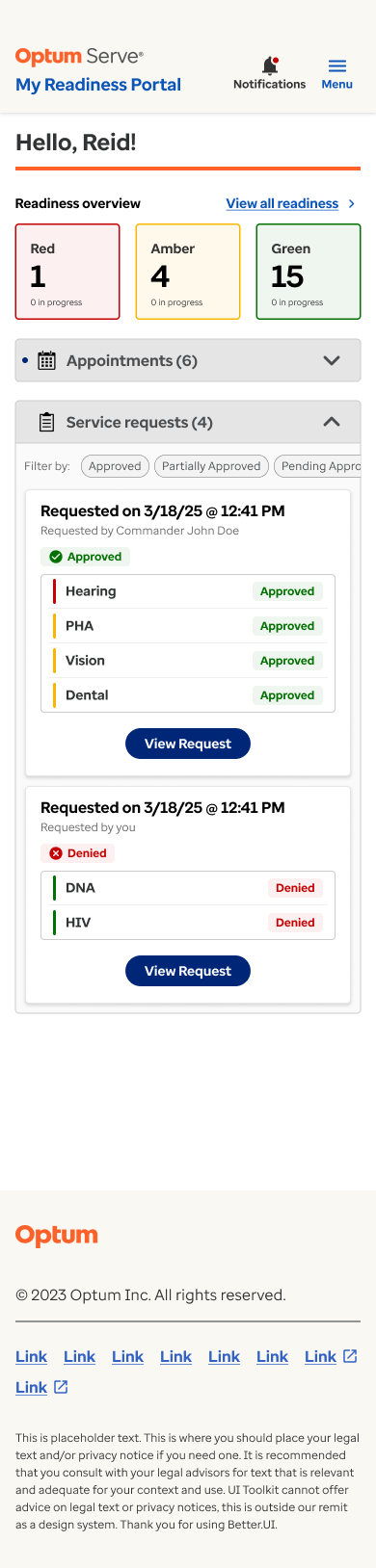
Tiled approach for readiness status so Service Members can take action on services due by color with a more prominent counter.
Simpler procedure list while still color-coding them, while including more options and information to account for use in the client portal.
Dedicated sections for Appointments and Service requests to view.
Learnings
- Service members currently don't have an intuitive way to request and schedule procedures to be ready to be deployed easily.
- Although a web experience seems seamless, there can be various tech domains linking and being stitched together.