Client Portal
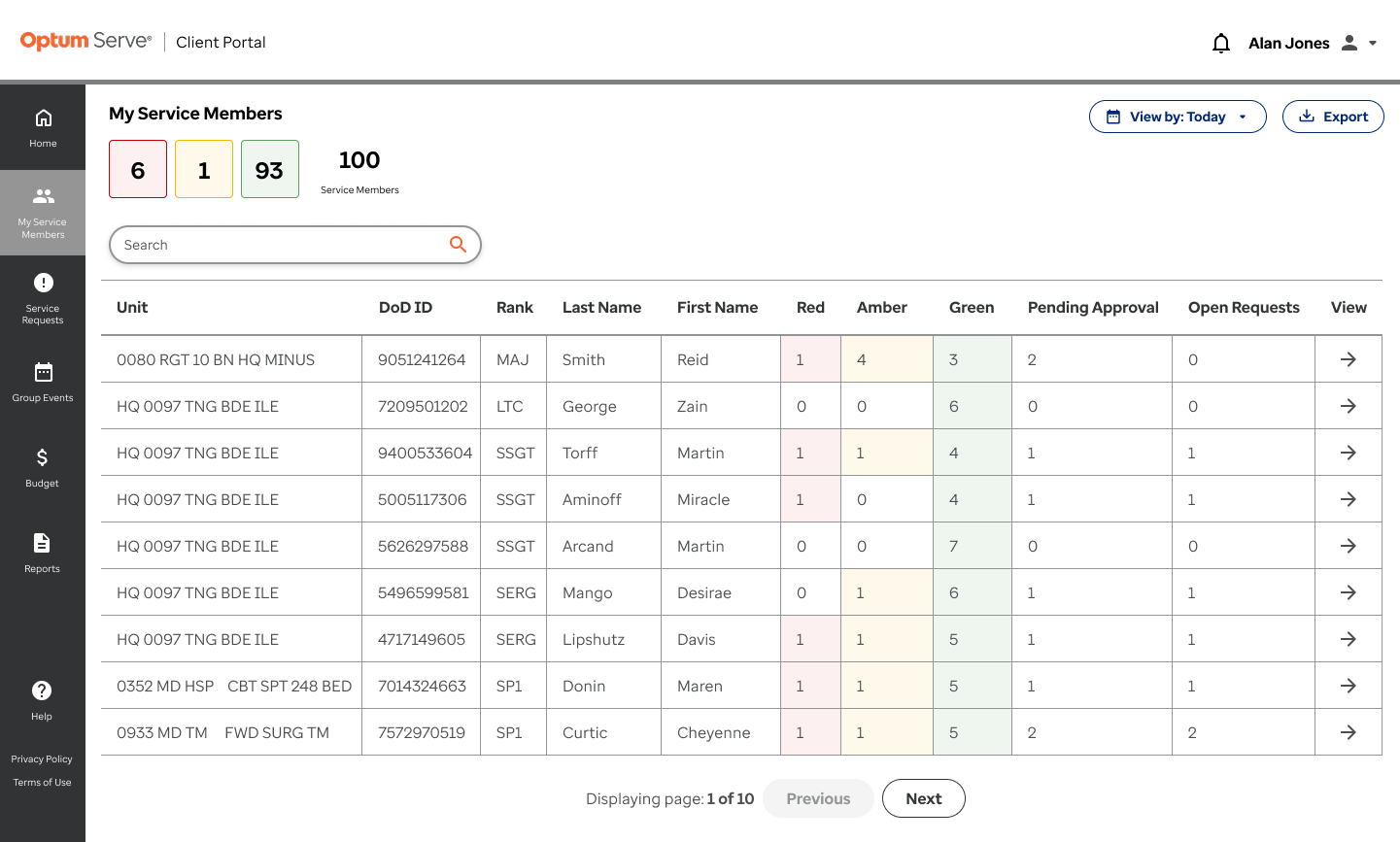
A scalable web application experience for the Defense Health Agency (DHA), and organizations under it as clients to view units' overall readiness status, manage their procedures, request procedures on behalf of them, make appointments, and approve or deny requests.
This project is password protected
Enter the password to view the full case study.
Overview
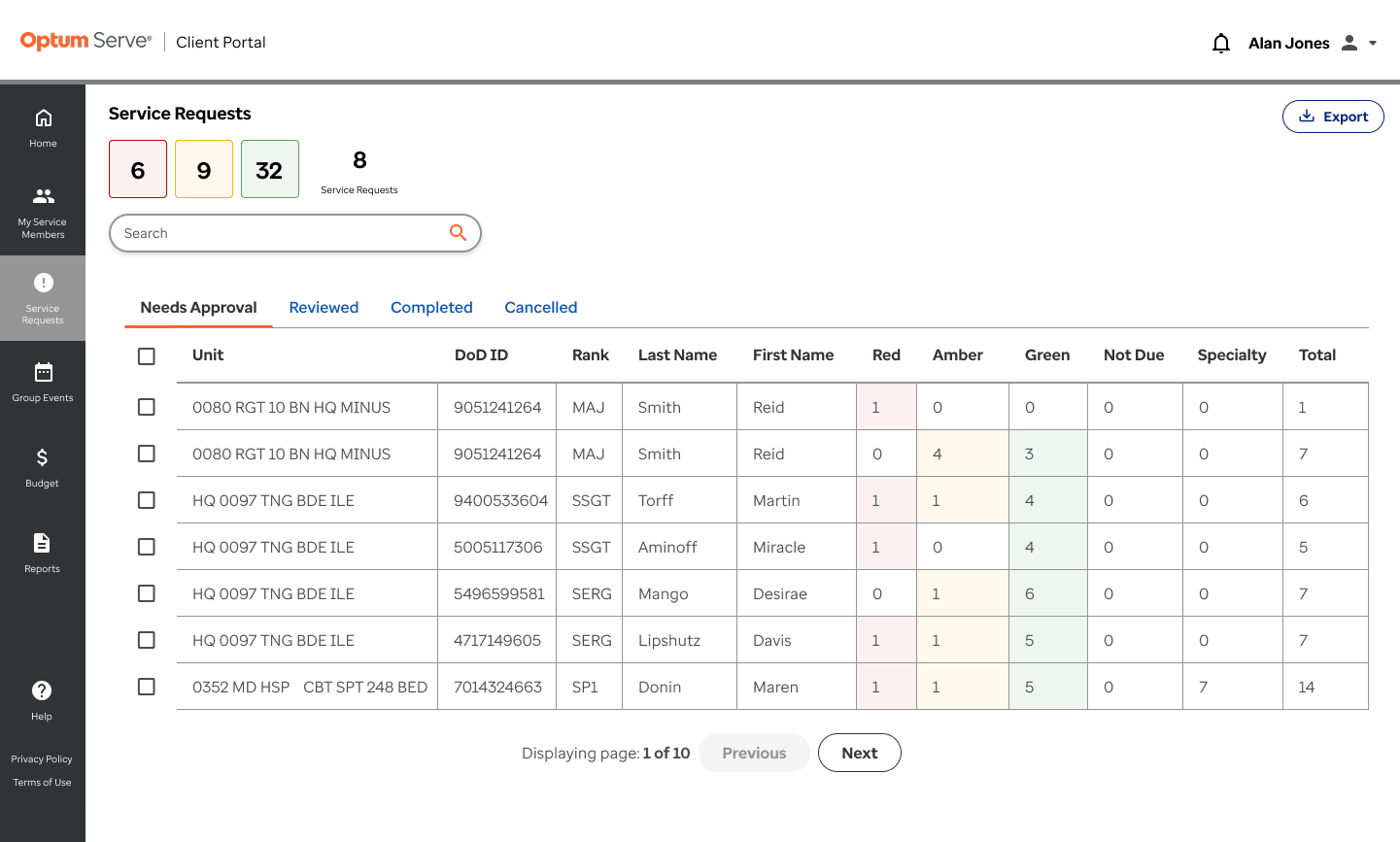
This is the government/Service-Component-facing side of the same RHRP4 platform: a portal used by SC Leads, SC Designees, and Approvers (DHA/branch personnel: Army, Navy, USMC, Coast Guard, ARNG) to manage medical/dental readiness on behalf of the service members under their command. Instead of one person managing their own appointments, this experience handles delegated care at scale: requesting, approving, denying, and canceling procedures for populations of SMs, through a Status Dashboard.
Problem
SC Leads are managing readiness and budget simultaneously for populations they don't have direct clinical contact with. They need to know who's overdue, who has appointments pending approval, and how much money is being spent, all in one place, without a native way to reconcile those three things pre-system. Two problems worth naming specifically:
A requirement is a "cross-check verification methodology to ensure SMs are not scheduled for the same services more than once," which only exists because multiple people (SC Lead, Designee, Contractor, even the SM) can schedule the same person.
Financial accountability is tied to individual scheduling actions and cancellations and no-shows trigger significant fees assessed to either the government or the contractor, and the dashboard has to make it clear and defensible who cancelled what and when.
Constraints
- SC Leads can apparently only manage/modify roles for their own Service Component
- Nearly every dataset (financials, scheduling, no-shows, completed services) has to export to Excel and/or PDF.
- Data must be sliceable by state (for ARNG specifically), UIC, and RUC, with color coding
Approach
Cross Team Collaboration
I also had the opportunity to connect with our Associate Director Deputy Program Manager, who served in the Army National Guard. He was a great asset because he provided information about what they used to use vs. what is actually needed in order to be ready to be deployed.
I was also able to connect with the Program team that initially was awarded RHRP2, and therefore had a wealth of knowledge of the contract as a whole and how each domain operated.
Cross Domain Compatibility and Component Reuse
This readiness dashboard needed to capture data to be used by the Budget Dashboard so that both Optum and the government could see where exactly the no shows and late cancellations were happening. Also, an area of waste is requesting and receiving a procedure sooner than necessary.
Component reuse was necessary to in order to provide a consistent experience but also for the developers to be able to implement a solution that worked for both experiences in a short amount of time in order for the government to review our proposal. This means that the procedure list needed to be included in the experience.
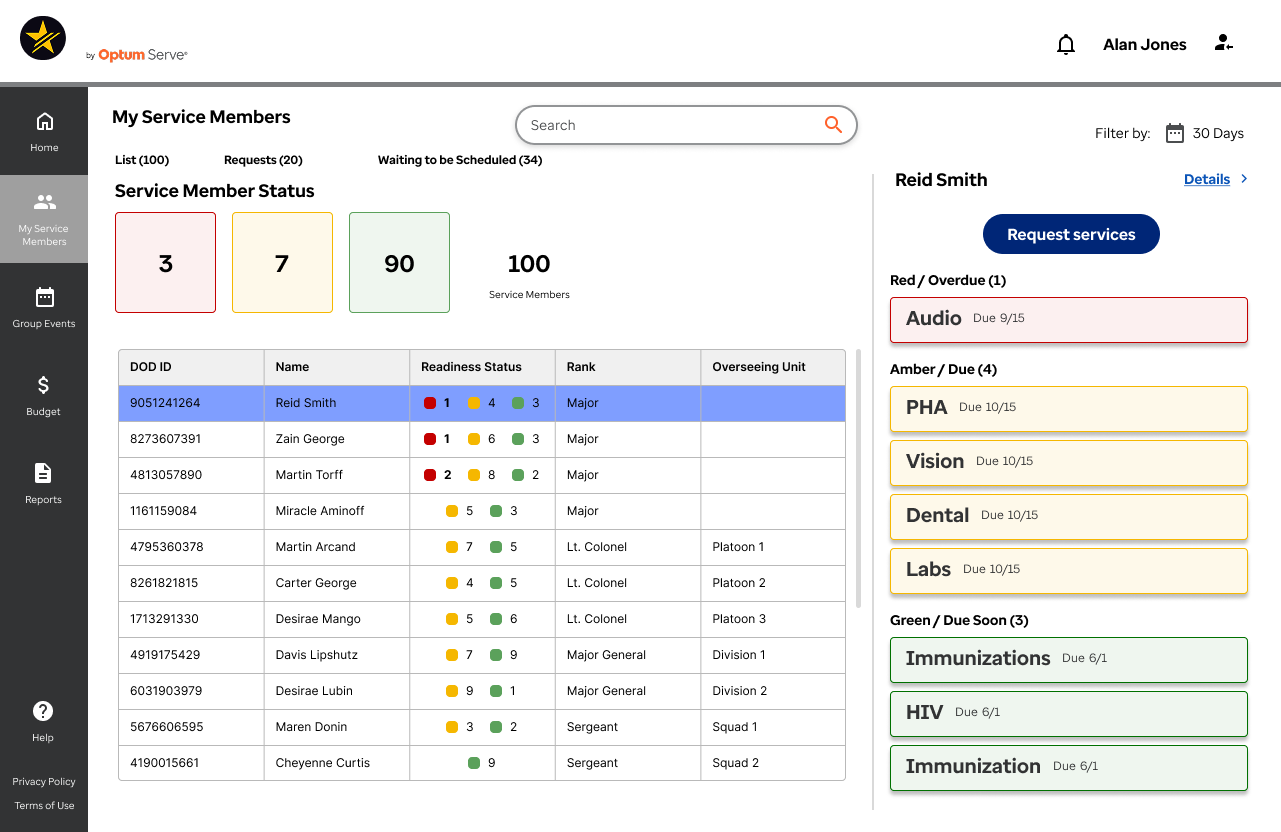
Initial Wireframes
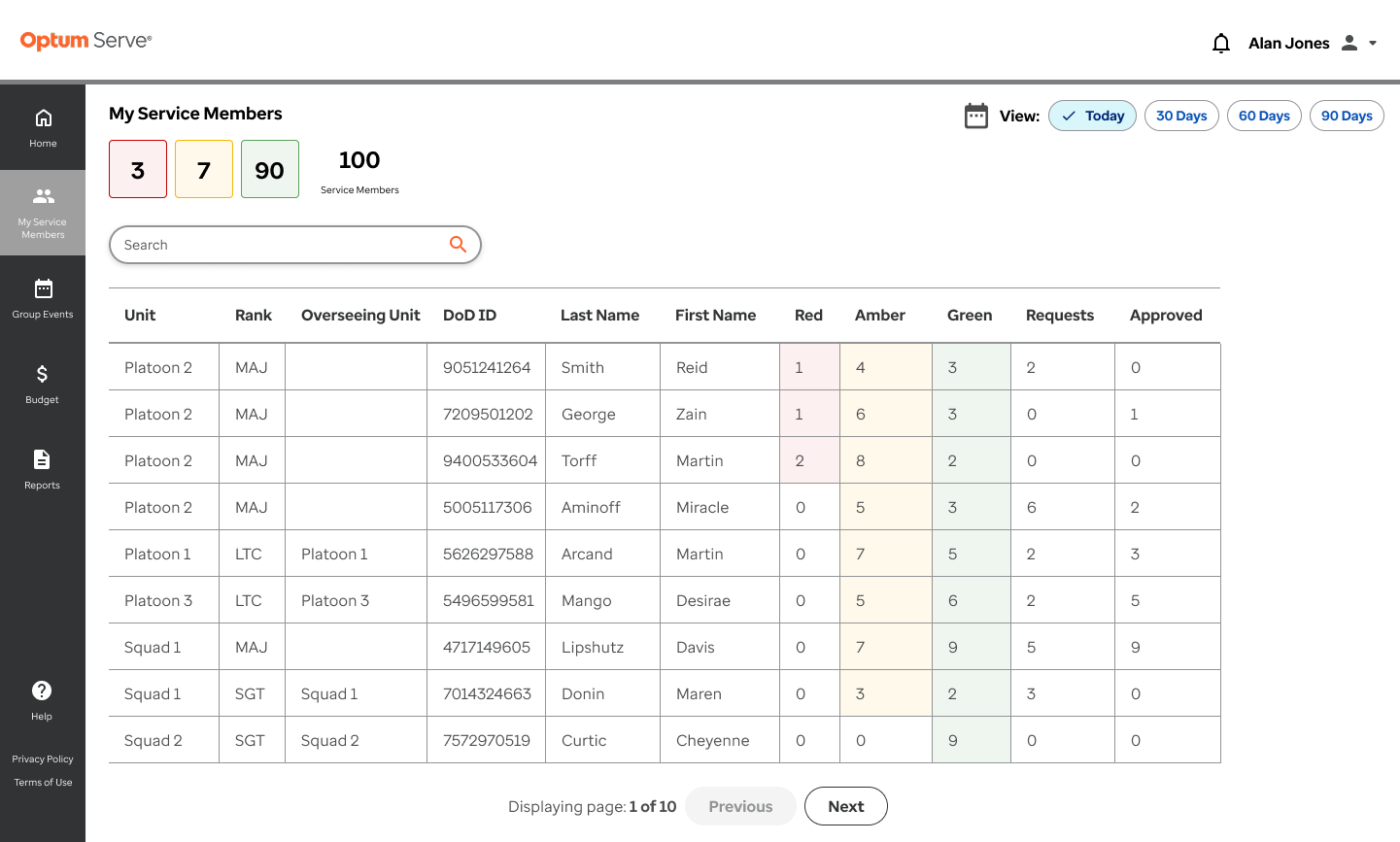
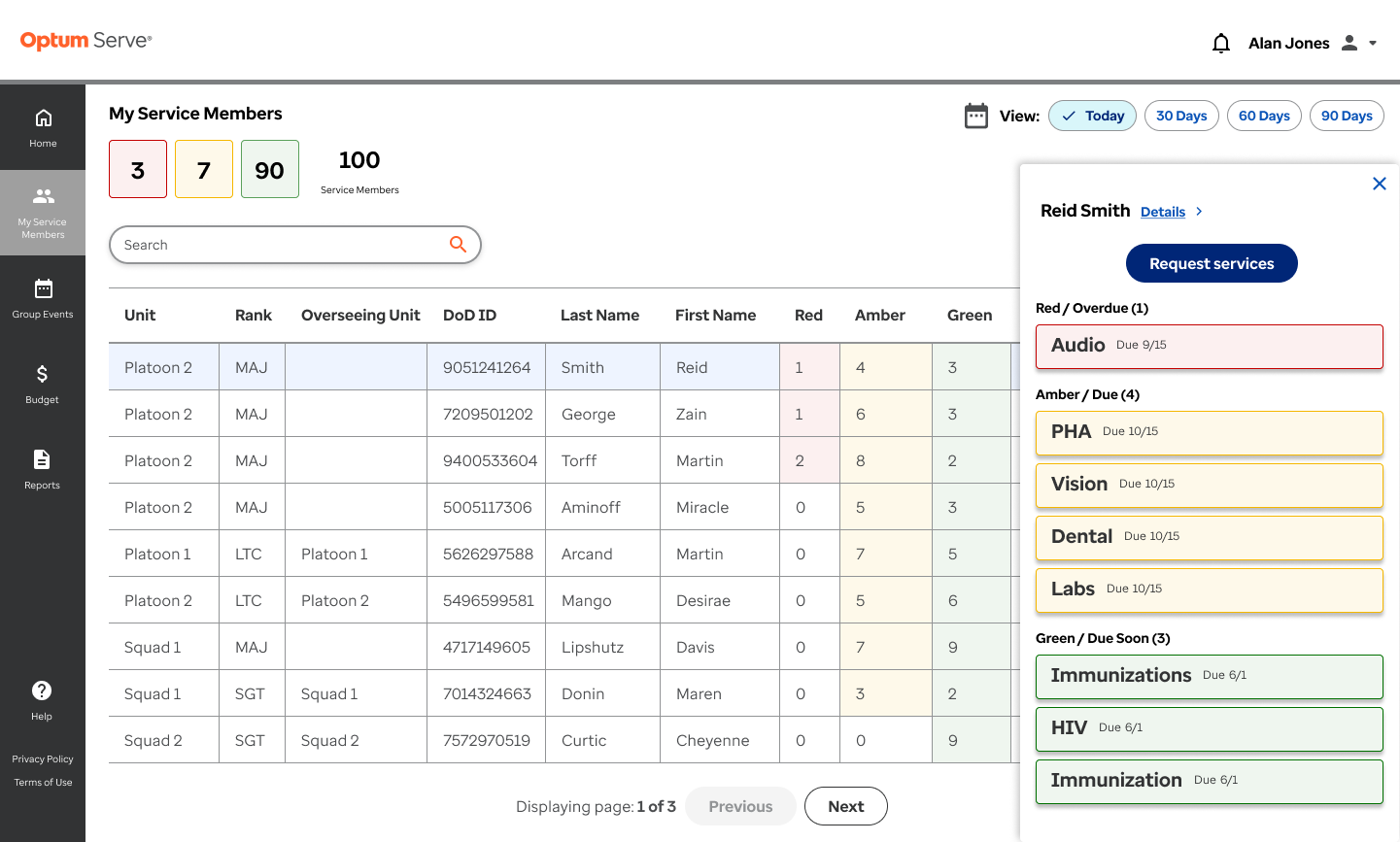
Key Decisions
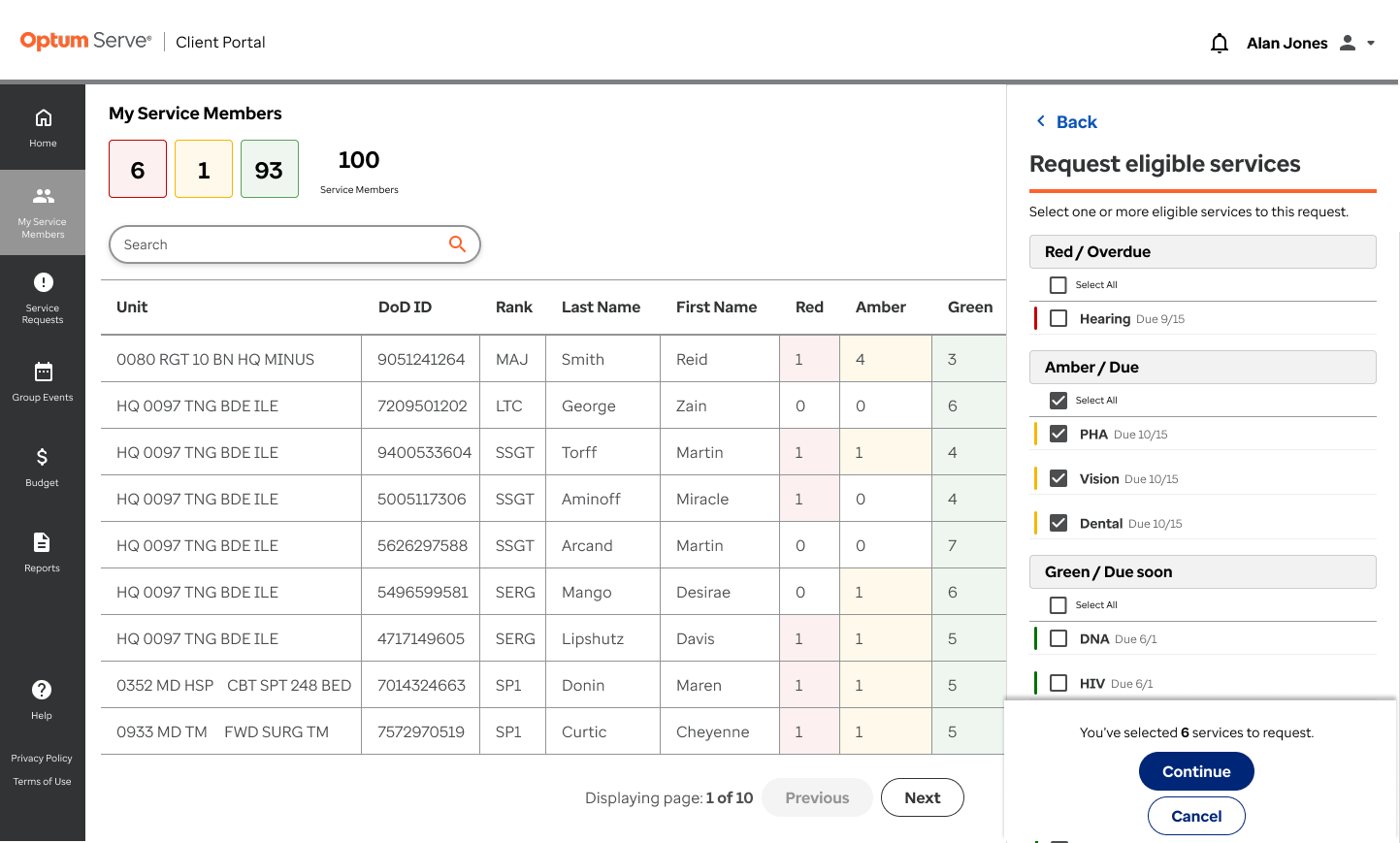
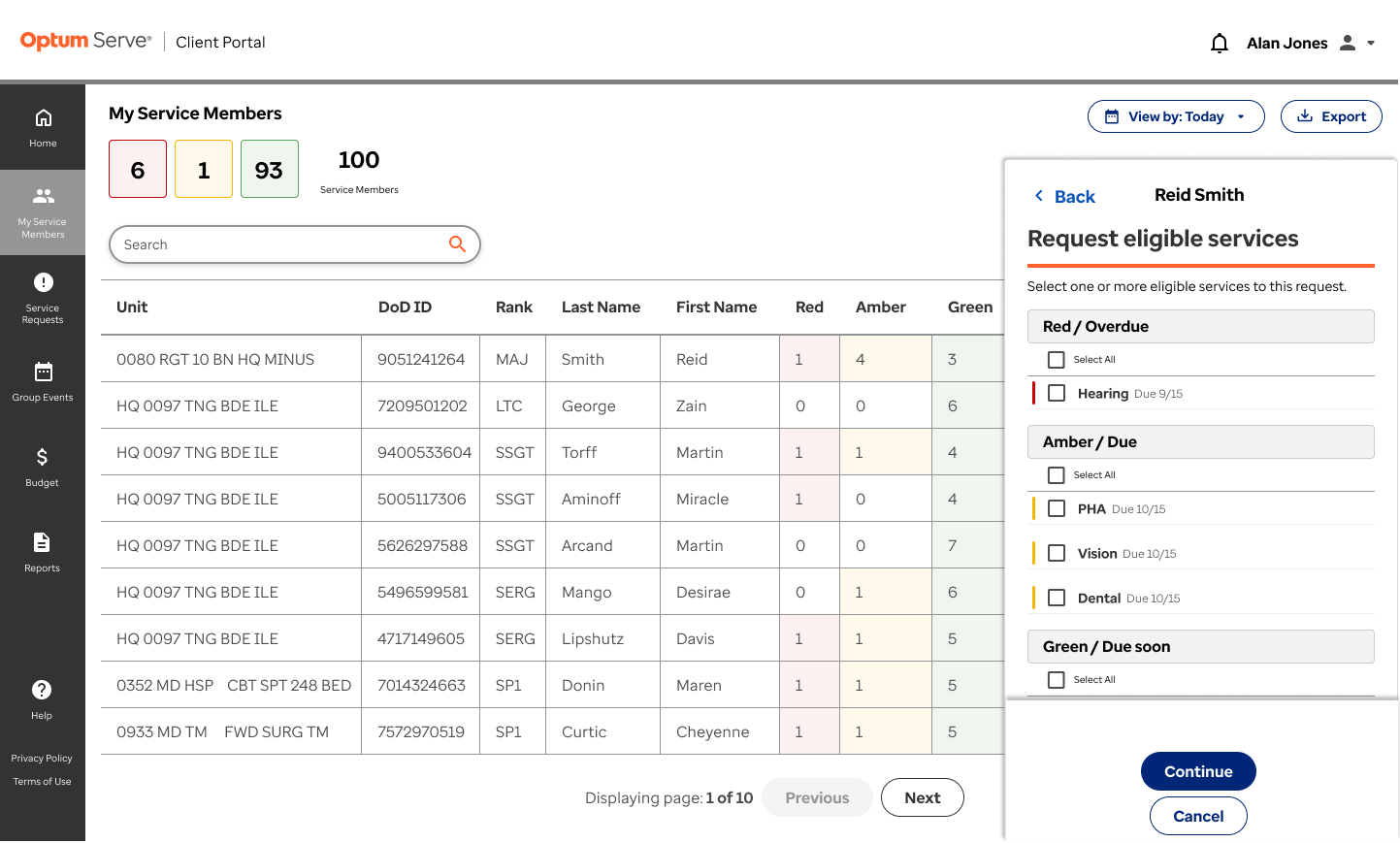
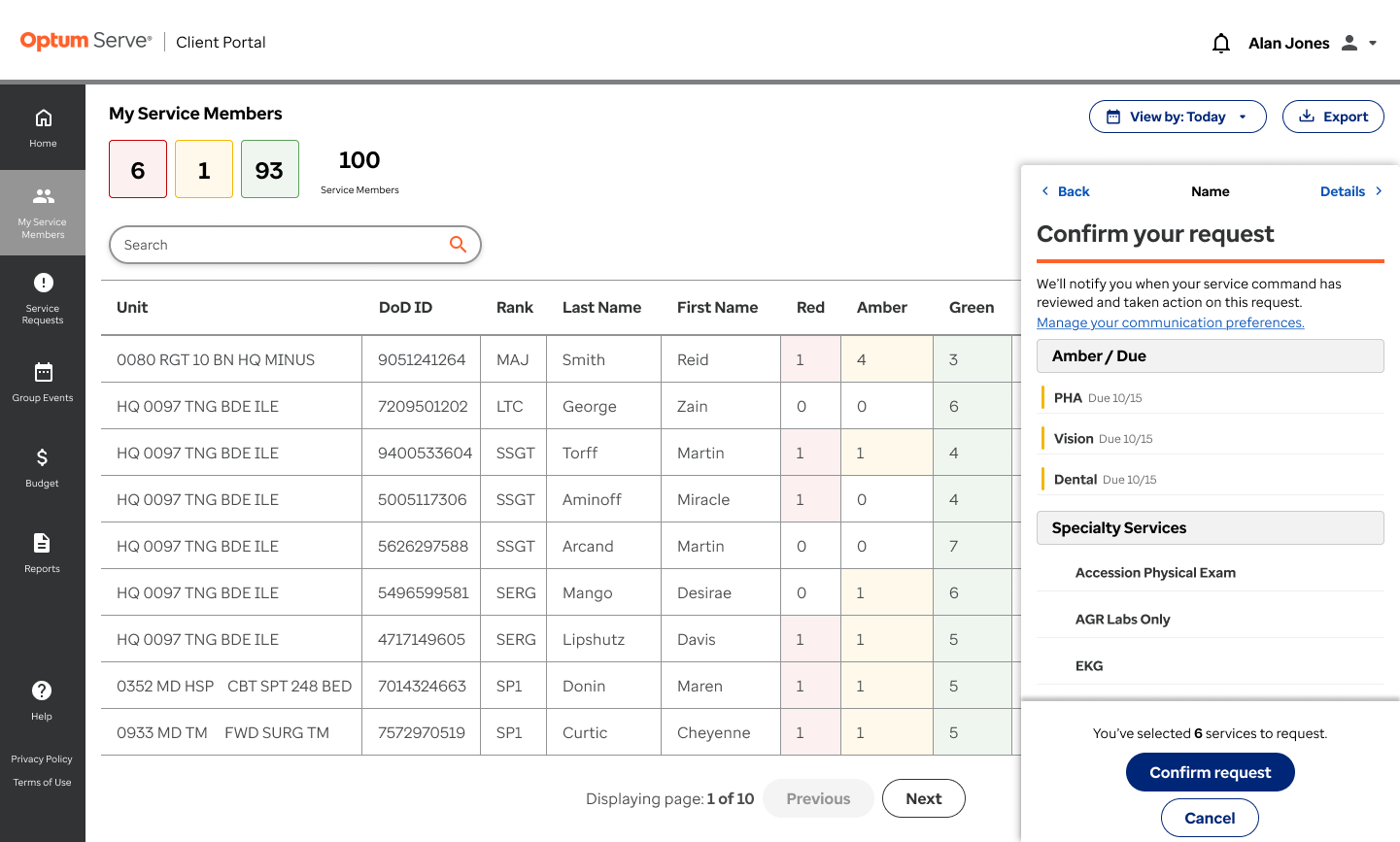
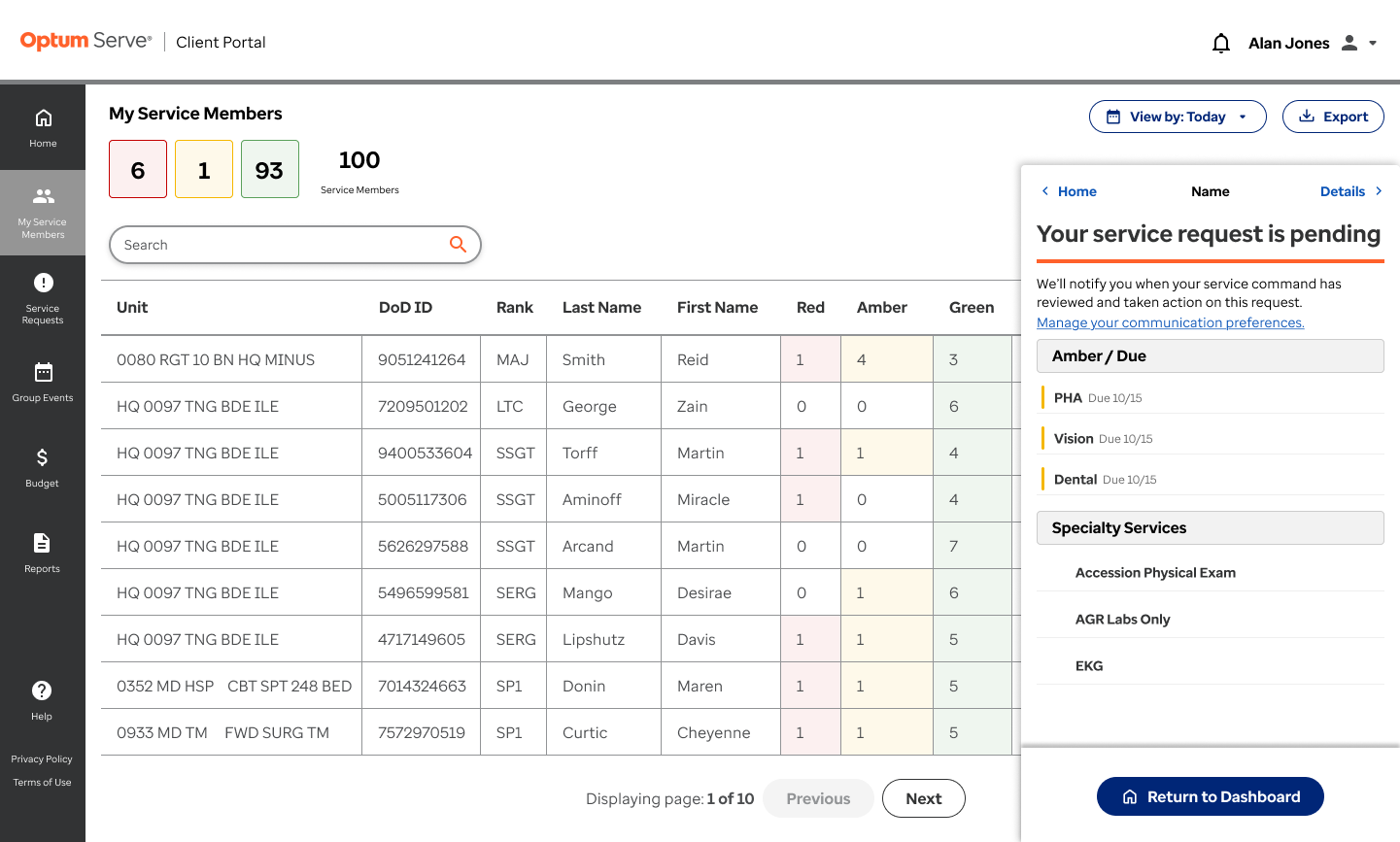
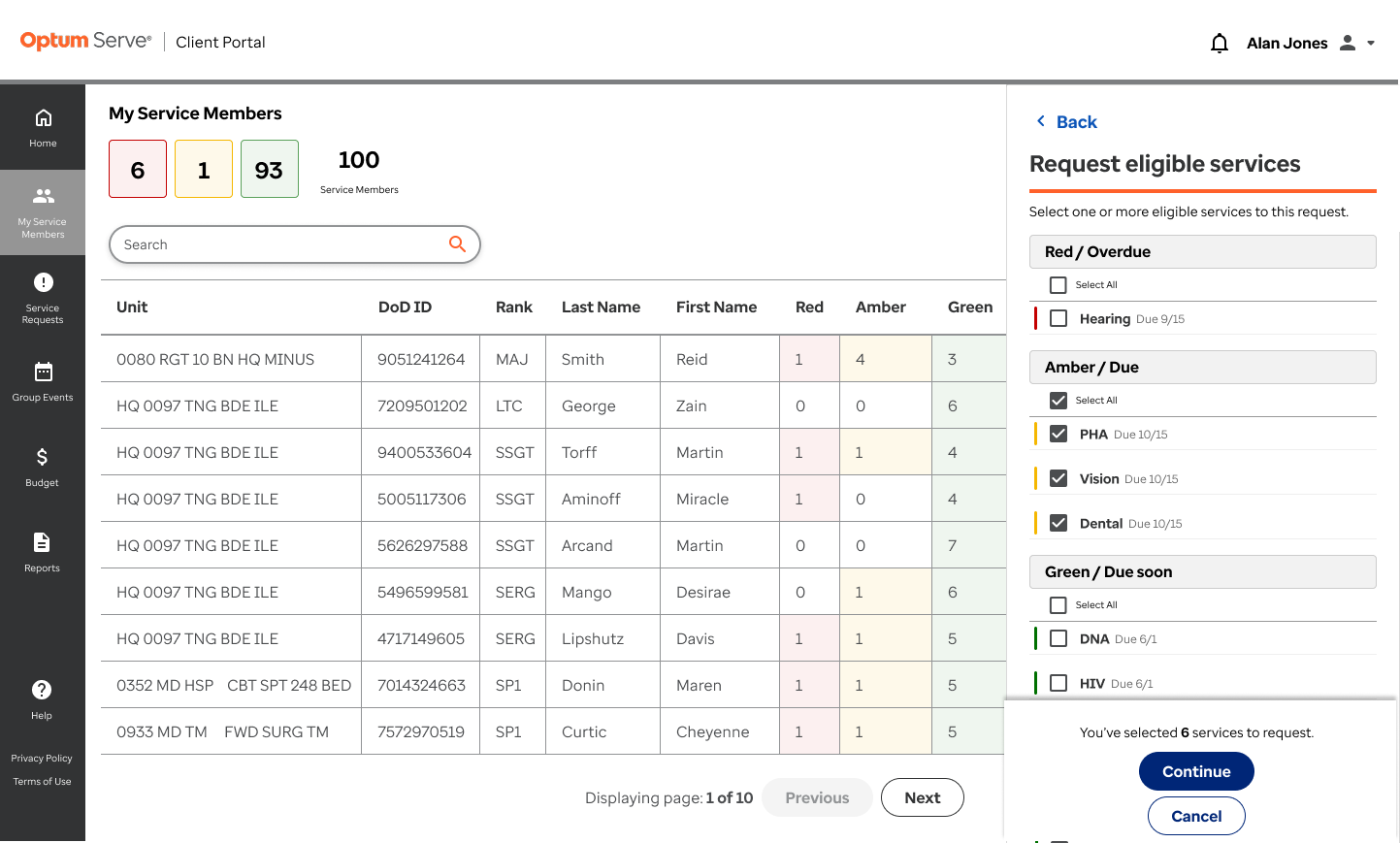
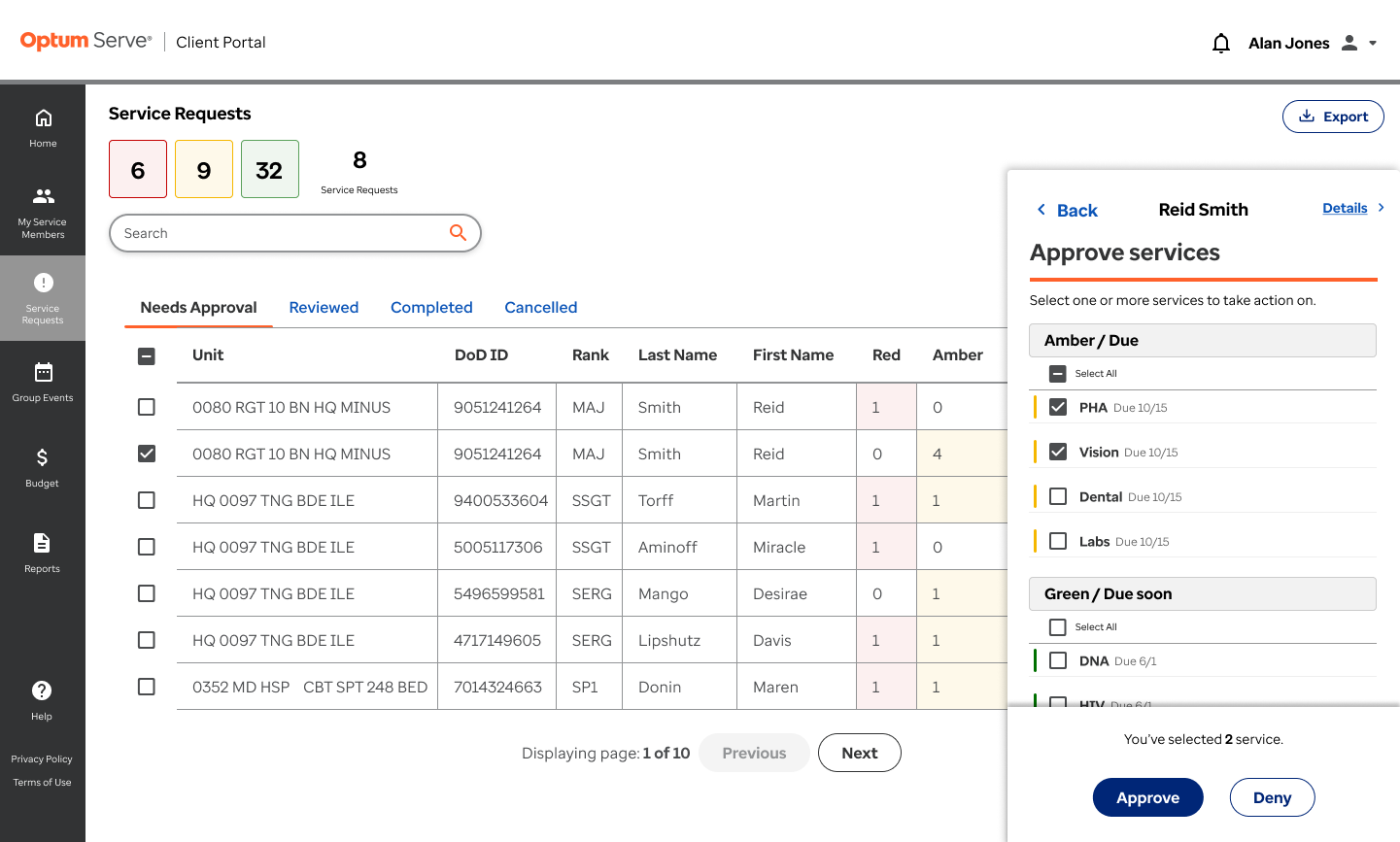
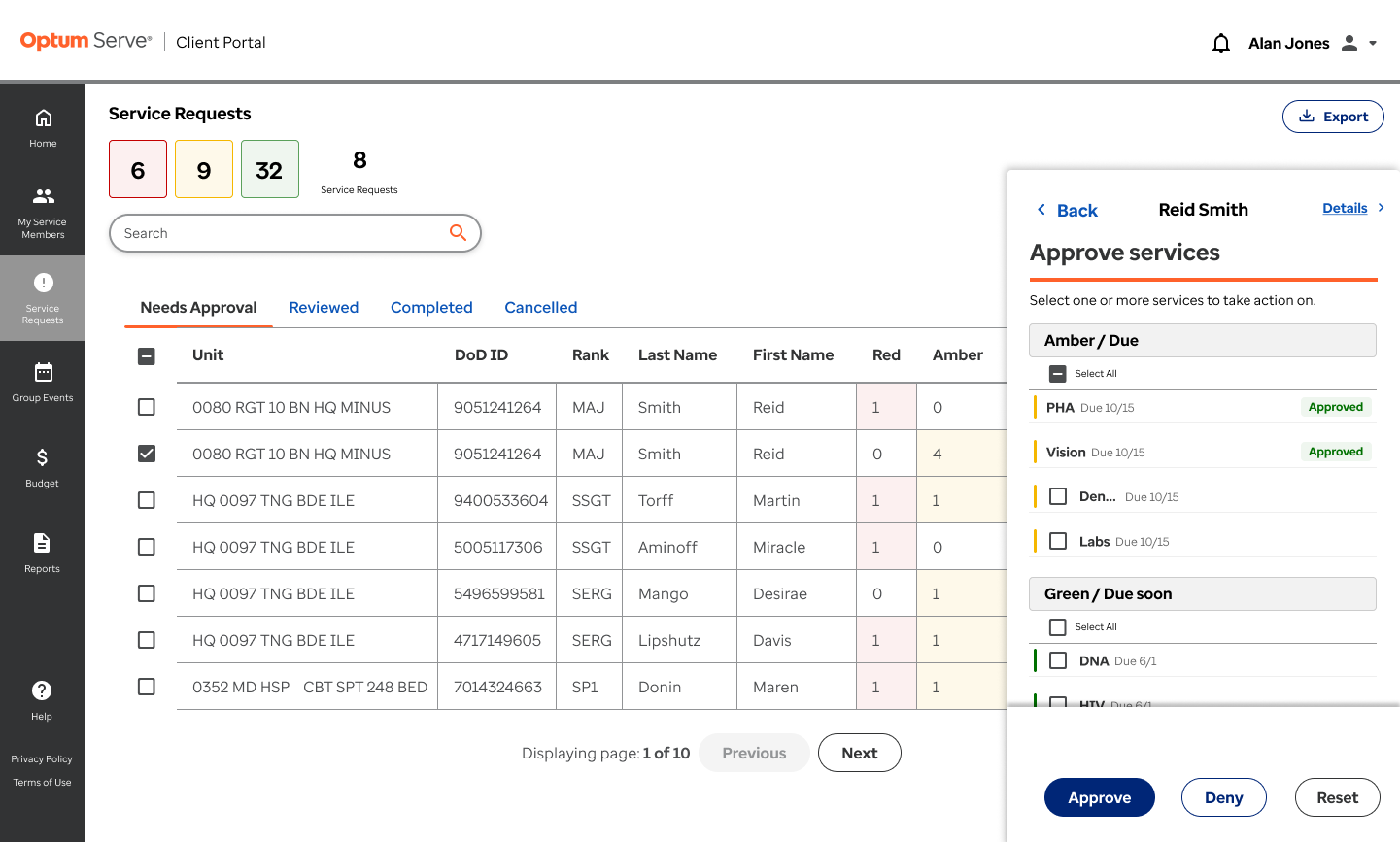
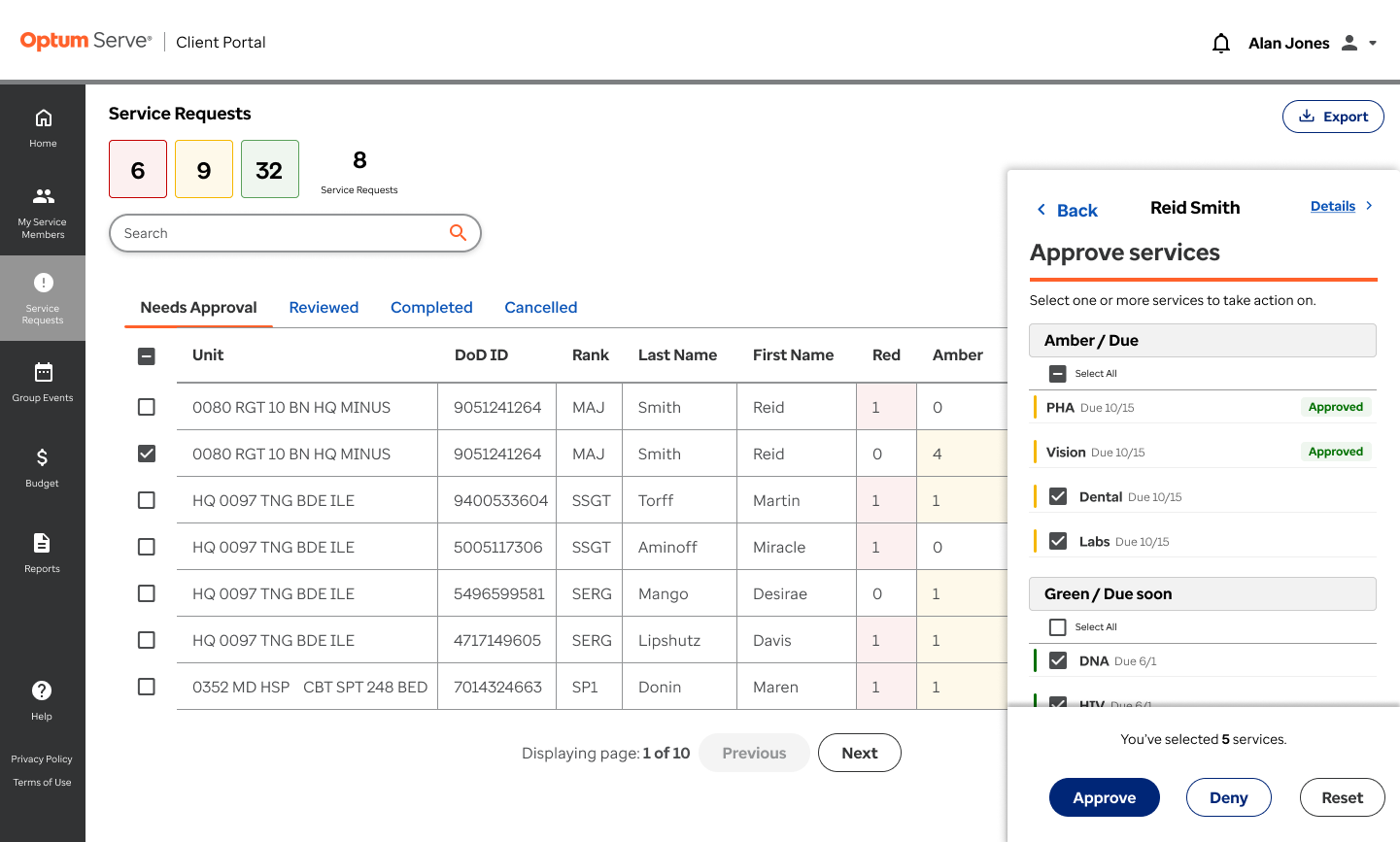
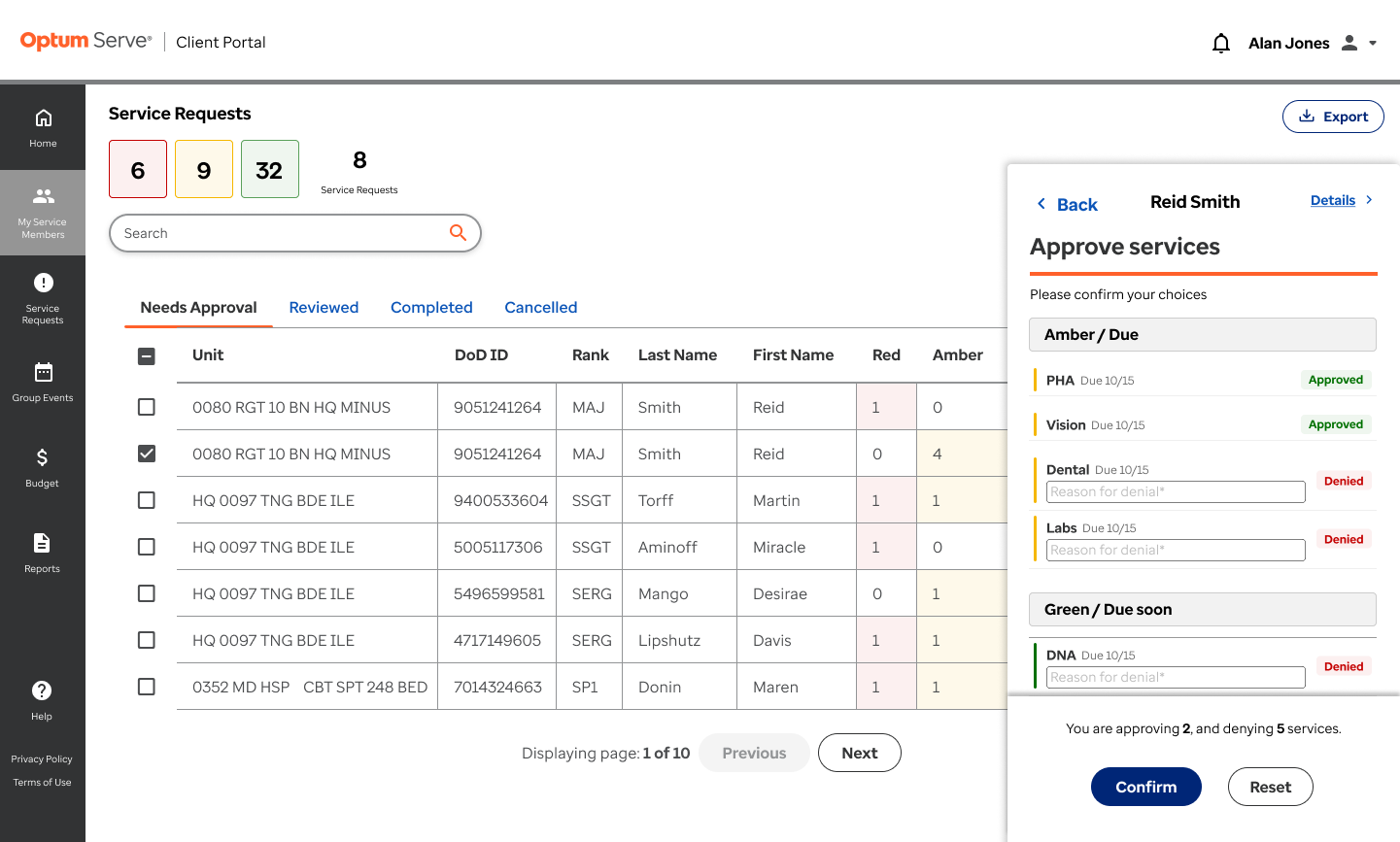
Drawer experience that is 1:1 with the service member portal
Need to have an MFE that sits on top so that the table can hold more information
Collapse options to View By days, and Export
More options and features, such as filters, may need to be made in future iterations.
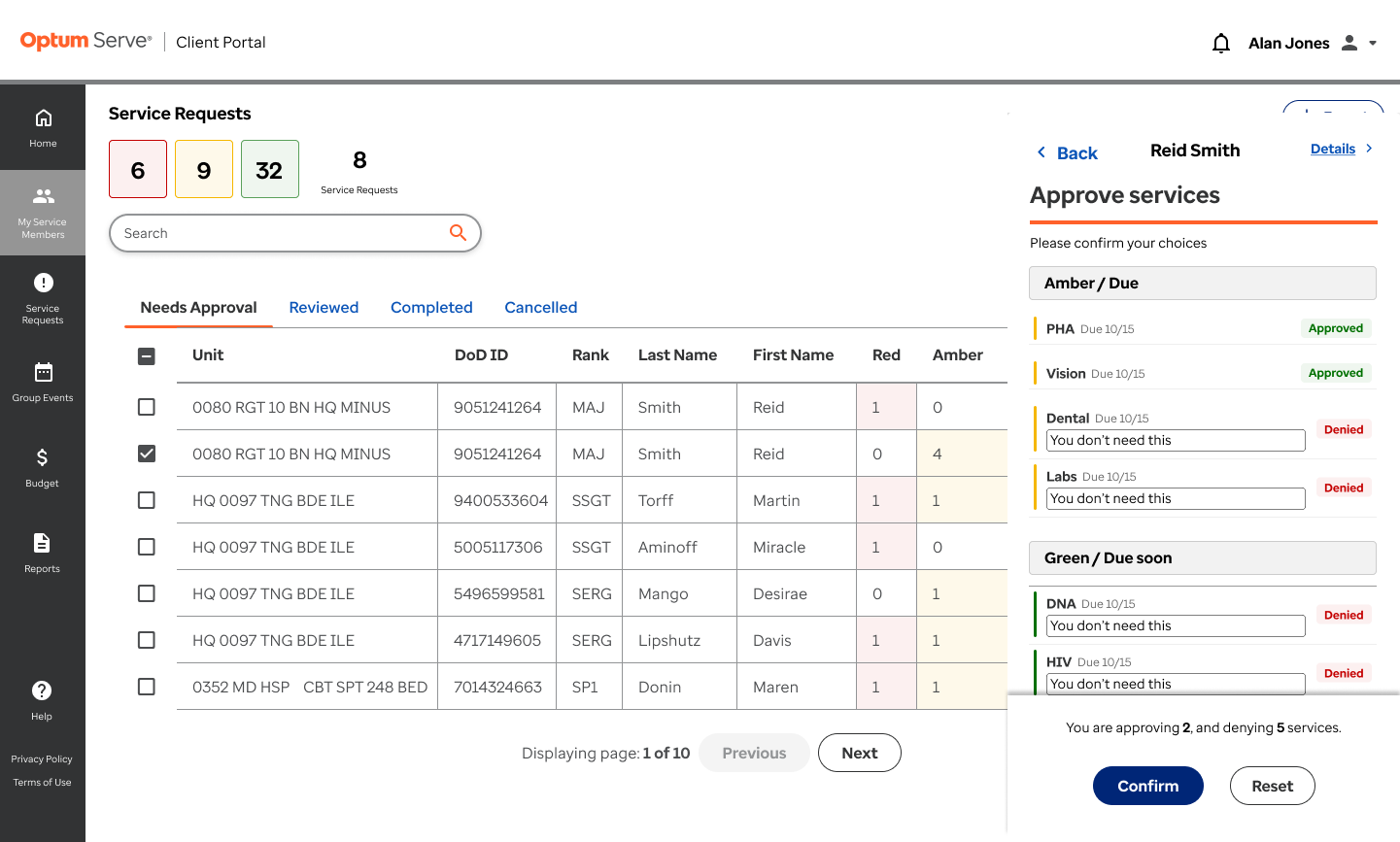
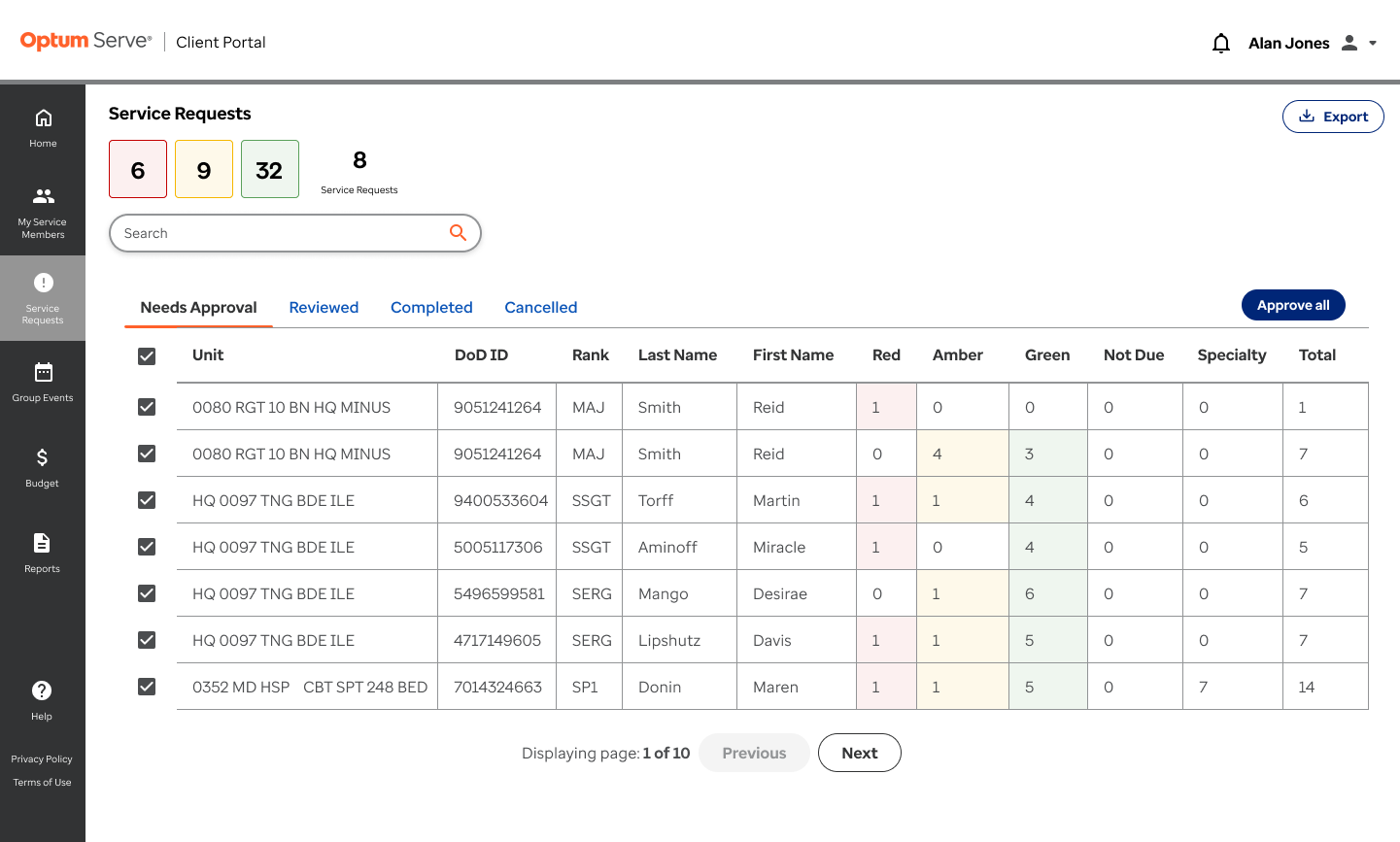
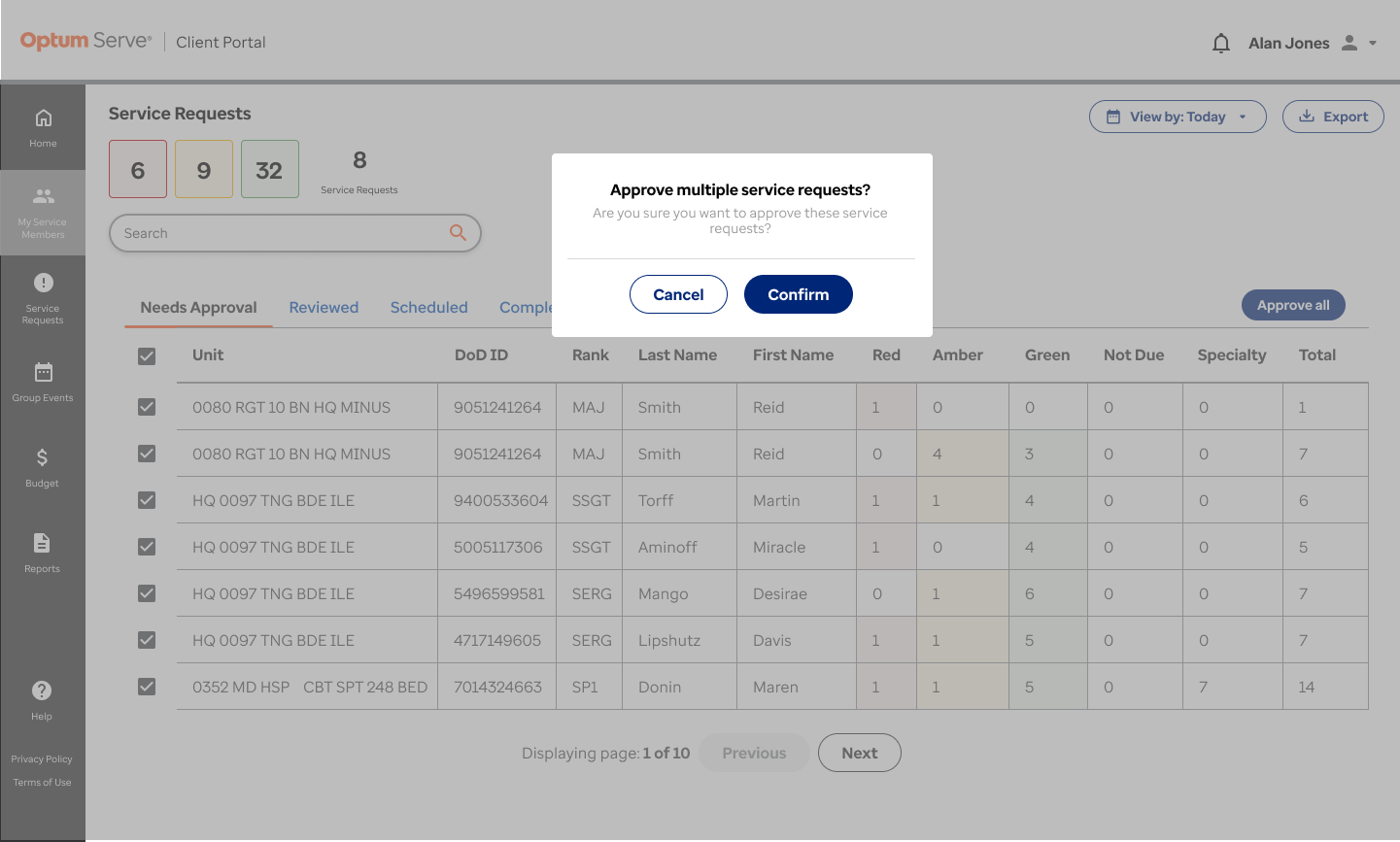
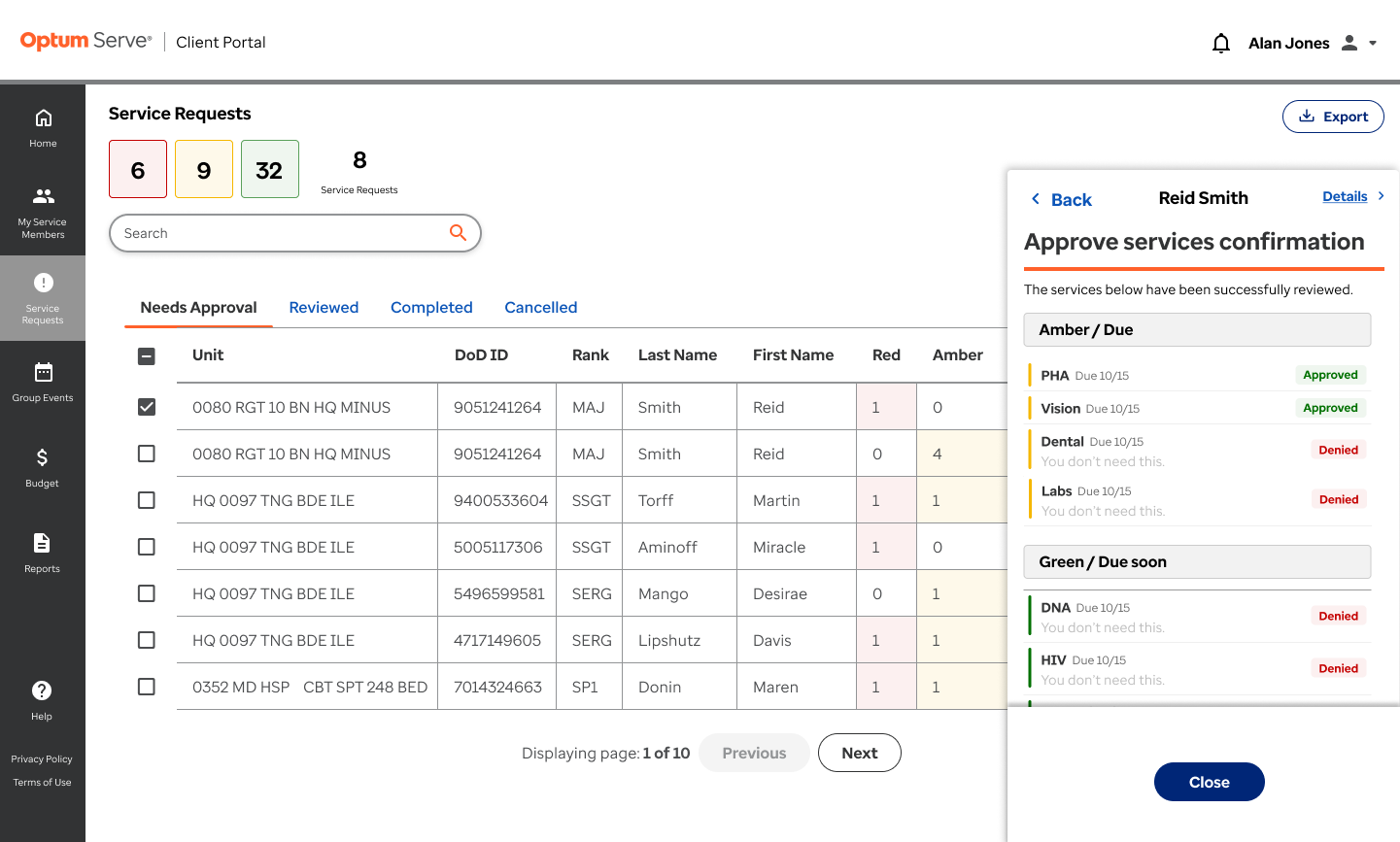
User needs to be able to bulk approve multiple requests at one time
Although not required in the PWS, Program managers felt this feature would be widely used and necessary, especially seeing that there would be hundreds of requests.
Result & Impact
Request
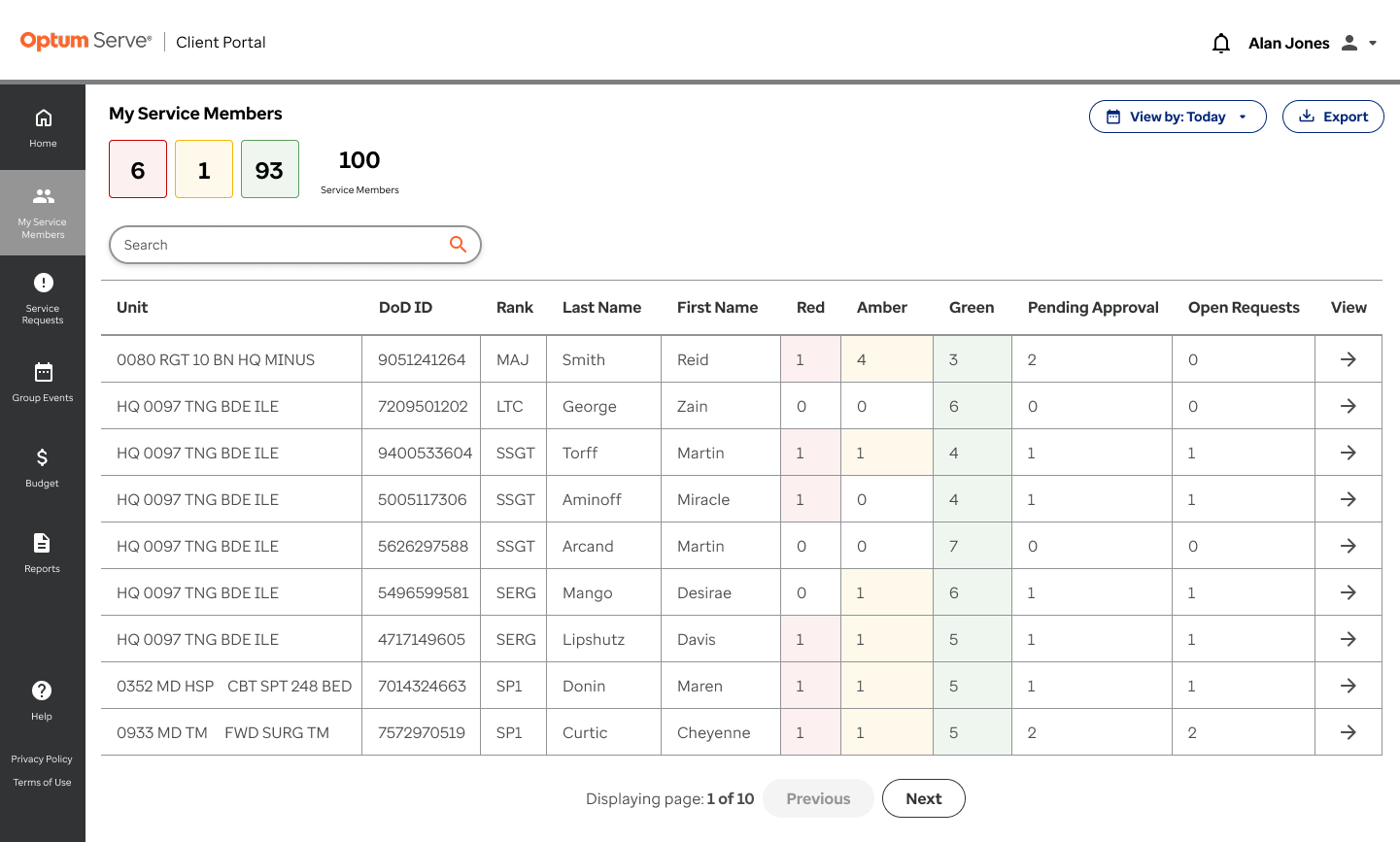
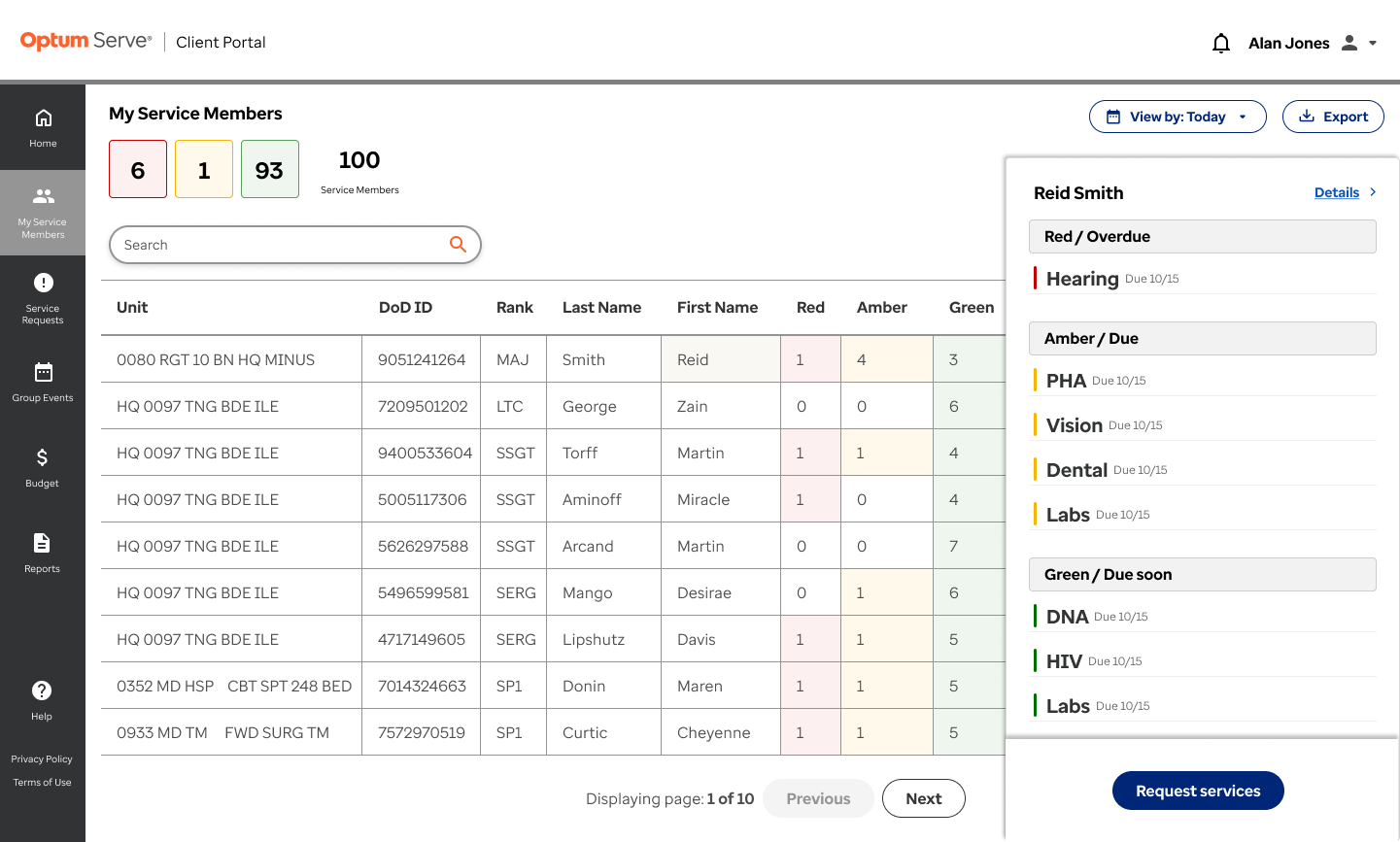
Confirm
Bulk Approve
Approve/Deny
Approve
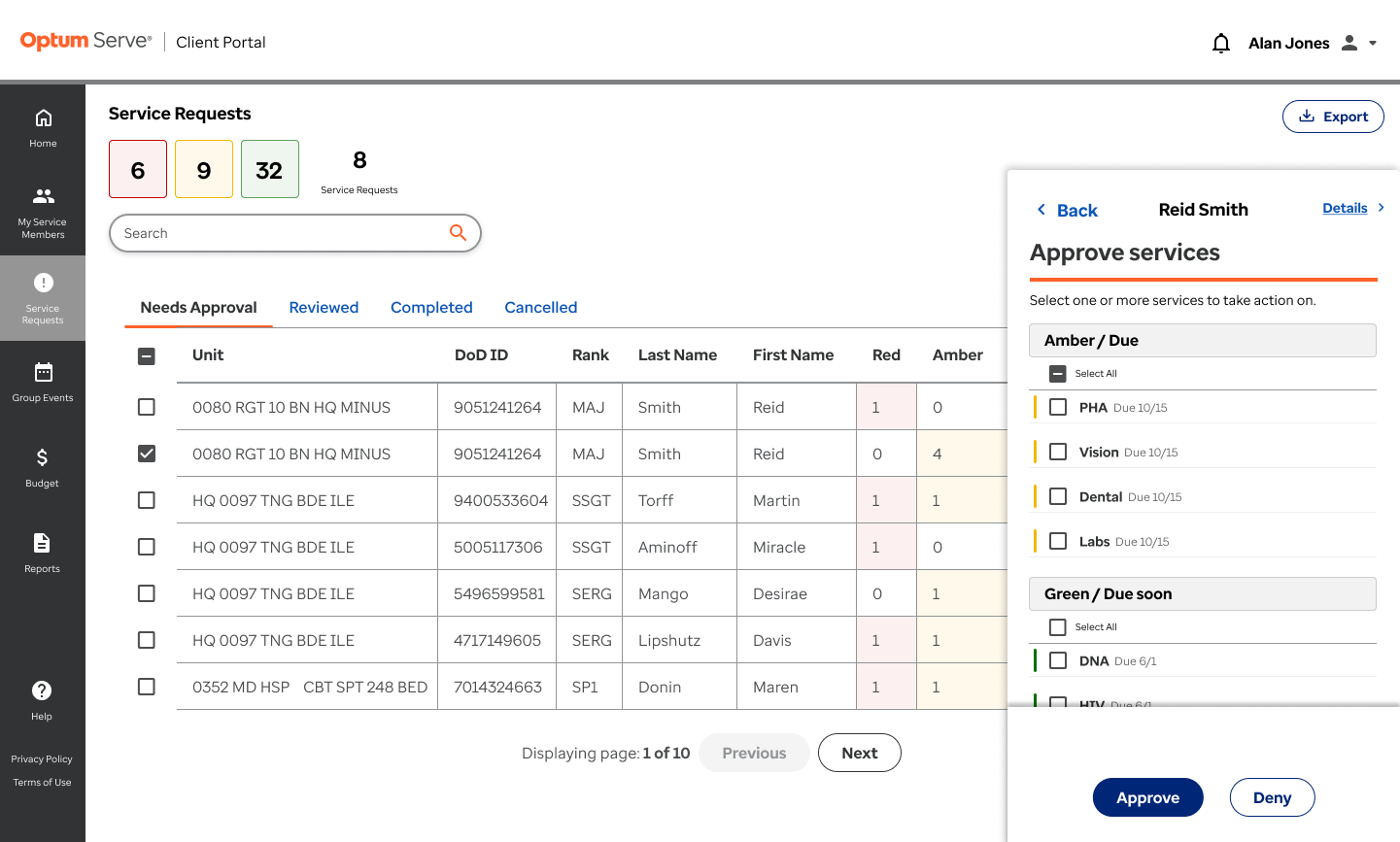
Deny
Learnings
- Clients manage dozens of units, and also hundreds of requests, so there needs to be an easy way to manage them
- The procedure requests and data are used in the budget dashboard to keep the fees accountable to the right party and so accuracy is important
- Forecasting the service members eligibility greatly helps provide a view of the future and weighs heavily on the option to create a group event.